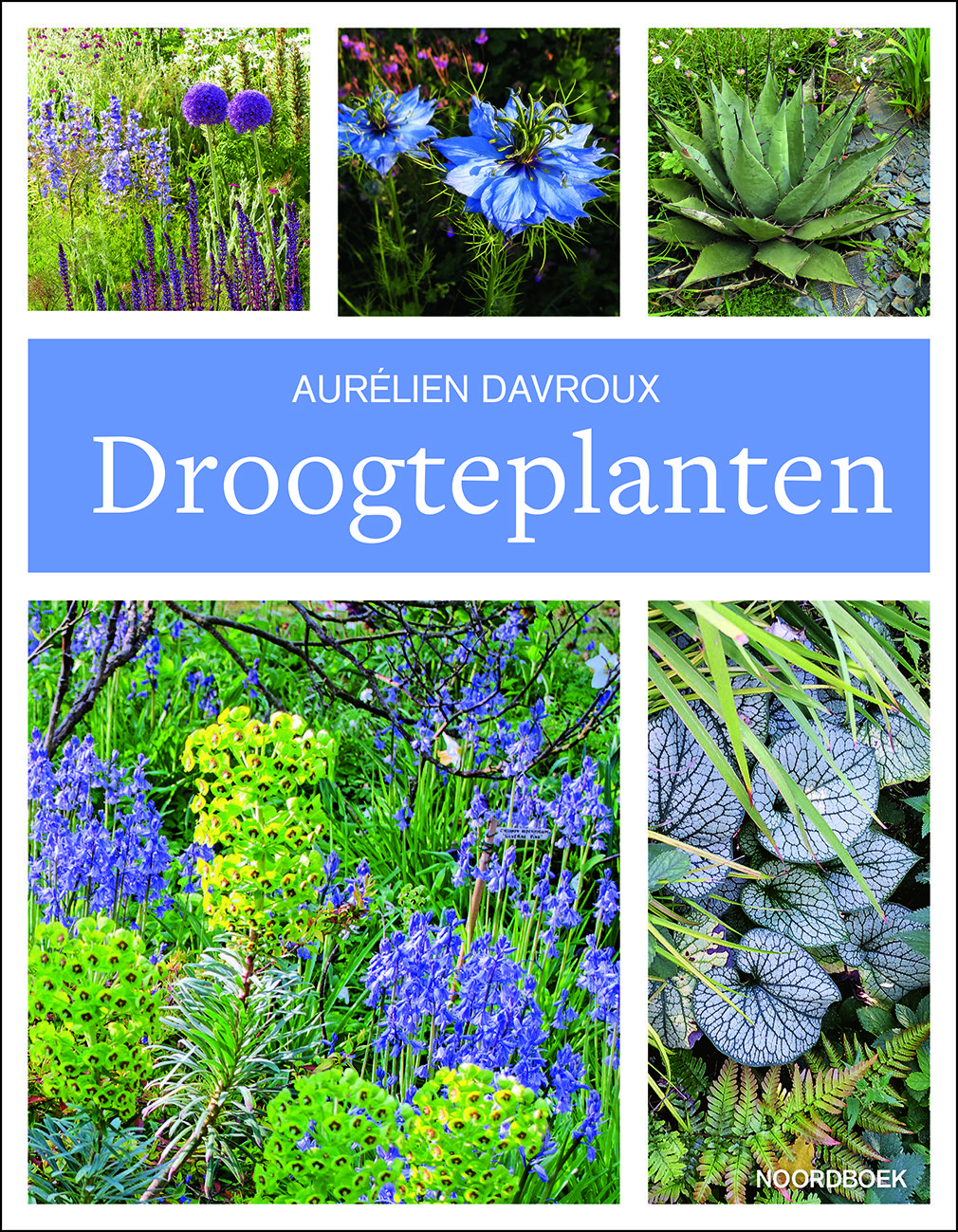
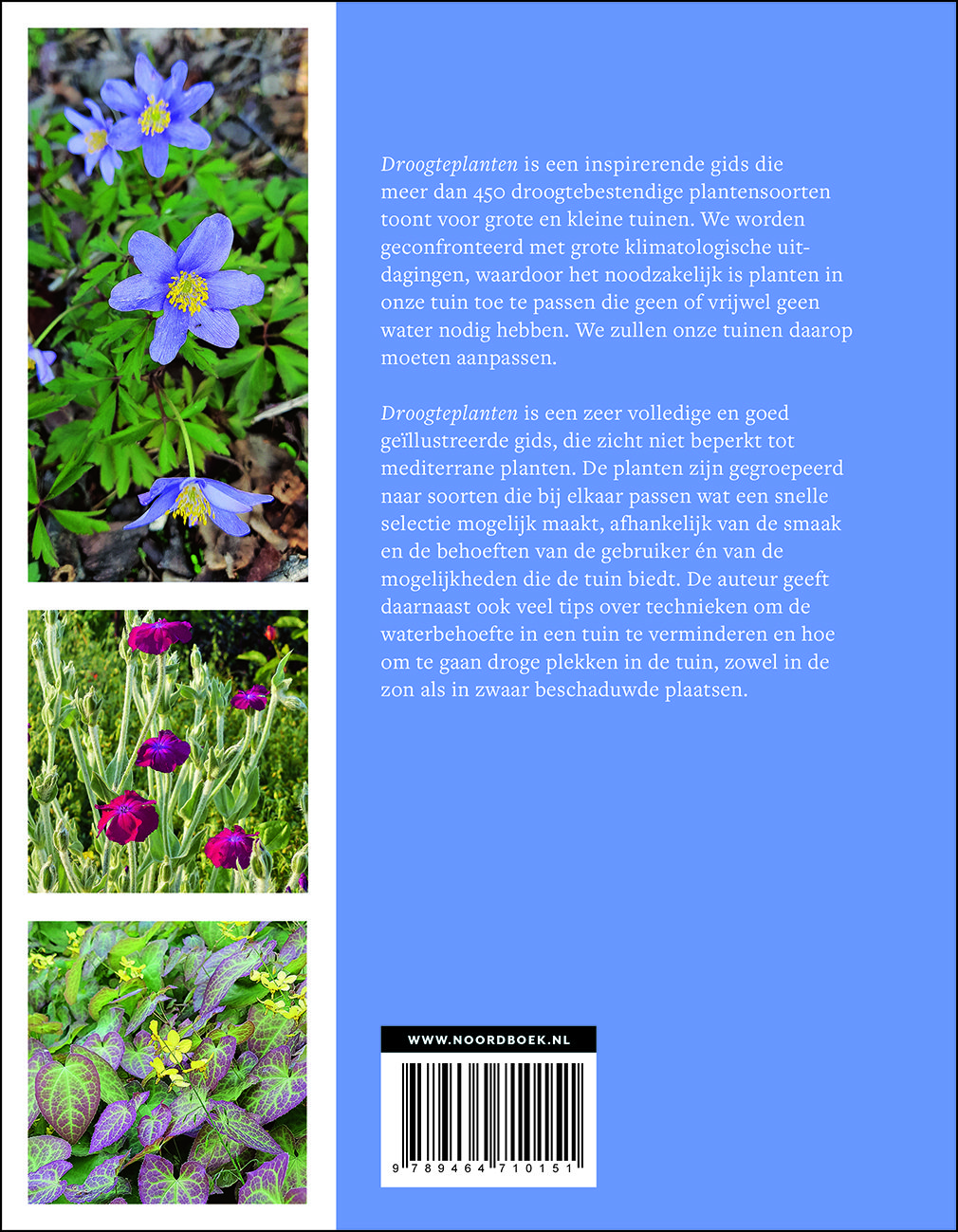
‘Droogteplanten’ is a (garden) plant guide featuring more than 450 plants that are highly resilient to drought. Use this book as a guide when planting your garden and save water. A must-read in times of climate change.
On climate change and drainage
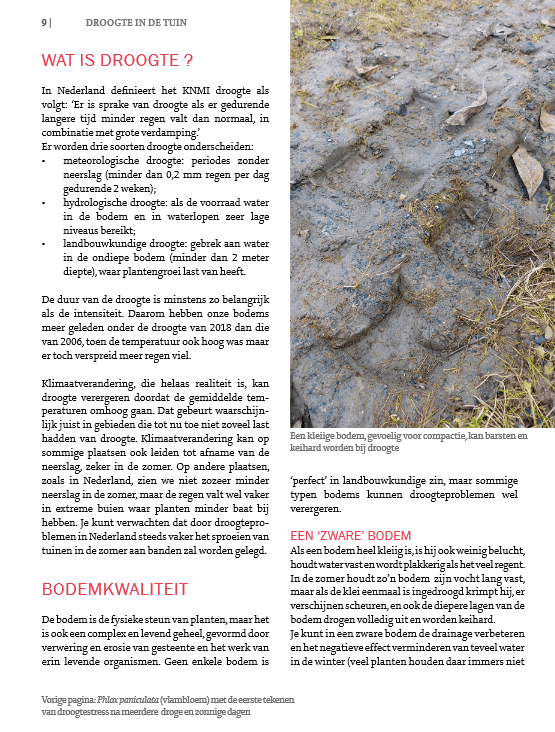
We couldn't ignore it in recent years. Drought has become a problem in the Netherlands and Flanders, especially in the higher areas in the north, east and south. Fortunately, the past wet winter has partially replenished the deficits again. (In October 2022 we wrote about ‘Irrigating during drought‘.)
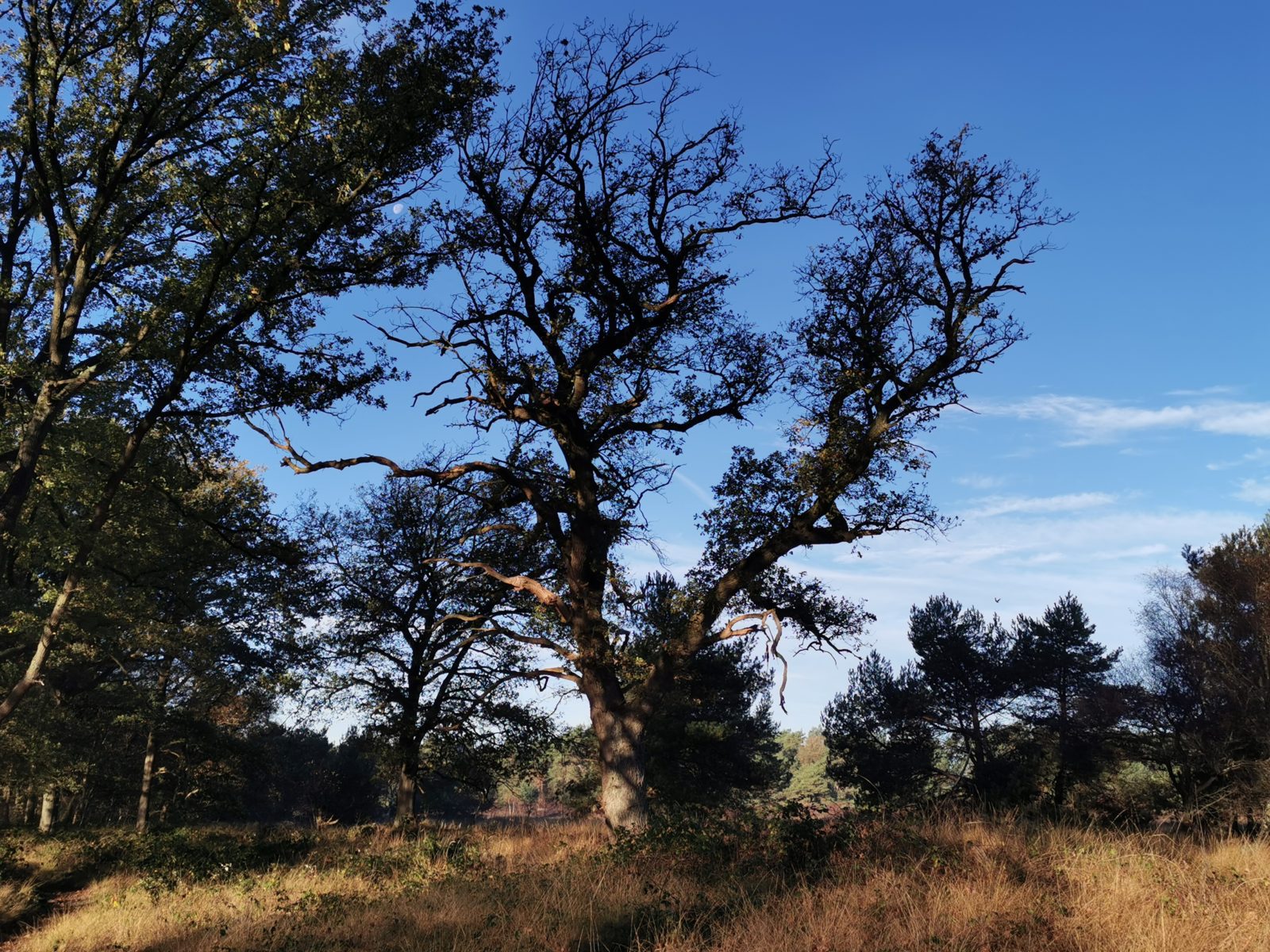
At De Tuinen van MergenMetz we see that the Heelsumse Beek which flows in the valley behind our garden and which is now carrying water again in some of its branches (such as the Papiermolenbeek) that had been dry for years. Good news for the short term, but unfortunately all developments indicate that we will have to deal with precipitation deficits more often in the future. Long-term trends clearly show that the precipitation deficit in summer has increased, especially over the past twenty years. (View them on the KNMI climate dashboard)
The strange thing is that the total precipitation is not really decreasing, only its distribution throughout the year is changing. Climate change brings us higher temperatures and more solar radiation, resulting in more evaporation. This is how we lose more precipitation. Combine this fact with our water management, which for centuries has been focused on draining away as much water as possible as quickly as possible, and you have a drought problem.
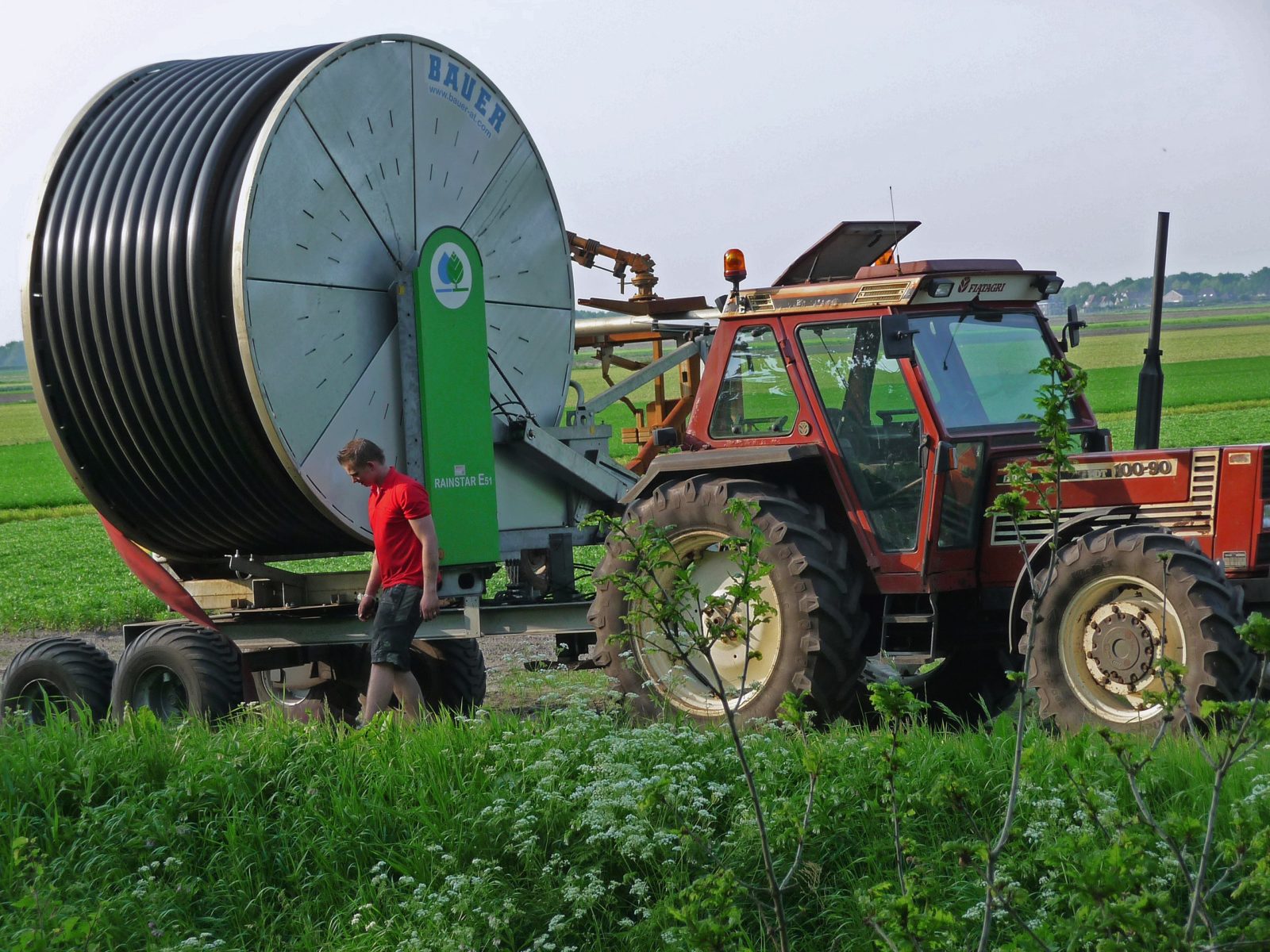
That is why we now need to use more and more groundwater or tap water to irrigate fields and gardens. This is a pity: good, clean groundwater is already scarce, and tap water requires costly treatment. We should primarily reserve it for drinking.
Therefore, this book says: use as little of that precious water in your garden as possible. Let nature sort it out itself. And that starts with a healthy soil (which can retain water much better) and with the right choice of plants.
Types of drought
In *Droogteplanten* you will find a comprehensive introduction (totalling around forty pages) explaining what drought actually is, and that there are different types of drought. Soil type is also relevant, as different soils react very differently to drought. And location; wind, sun, slopes and other plant growth can intensify drought. During translation, these introductory chapters have been quite heavily adapted to ensure they are also appropriate and accurate for the Netherlands and Flanders. After all, the climate in France is not the same as ours. Some information has been retained, such as that concerning mountainous regions, making this book equally ideal for Dutch speakers with a house and garden in more southern regions of Europe.
The second chapter is about what you can do in your garden to cope with drought and help the plants. The right choice of plants, of course. But to be able to make that choice, you need to know your site well. Even in the smallest town garden, there are damp and drier corners, to which plants can react very differently. You can help the soil by mulching or choosing good ground-covering plants. Watering is also covered, of course: if you do it, for example with new plantings, do it properly. We previously wrote about this ourselves. You can also collect rainwater and use that.
As a final part of the introduction, there is another chapter that covers the plants themselves with their adaptations to drought. Needle formation or fleshy leaves, bulbs and tubers, pigments, summer dormancy... And more.
Plant guide
Essentially, this book is a (garden) plant guide. The plants are divided into three main groups: drought-tolerant plants for full sun, for partial shade, and for shade.
The section about full sun is by far the most extensive, the section about shade the shortest, but that is super useful. Our experience is in fact that spots in dry shade are the hardest to find suitable plants for. To make looking things up easier, there is a good index with both Dutch and Latin names.
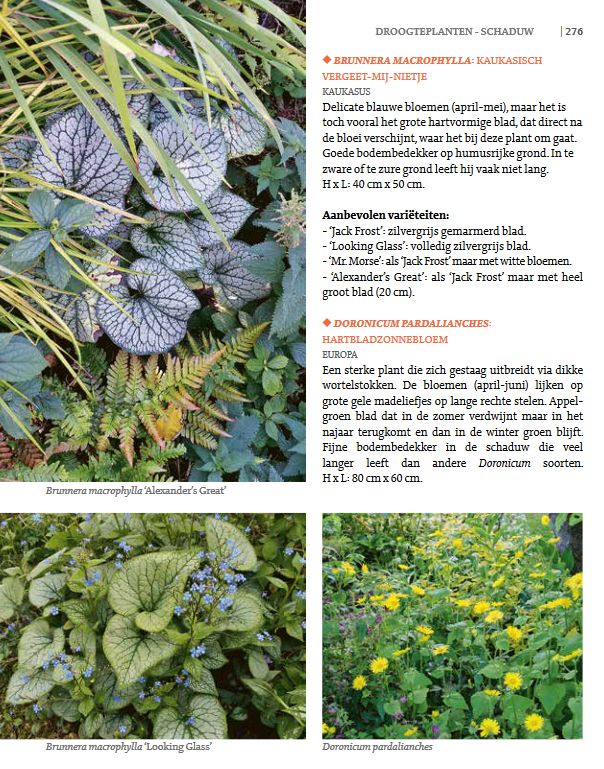
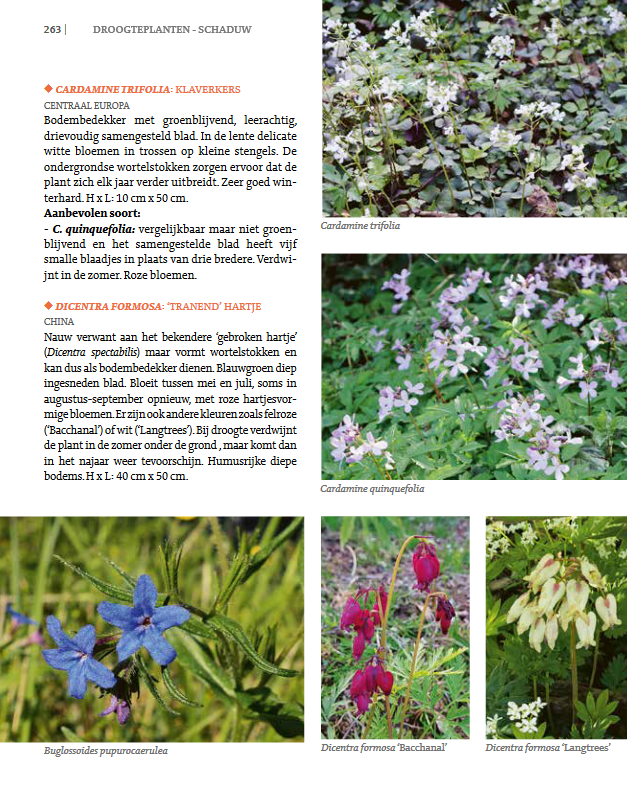
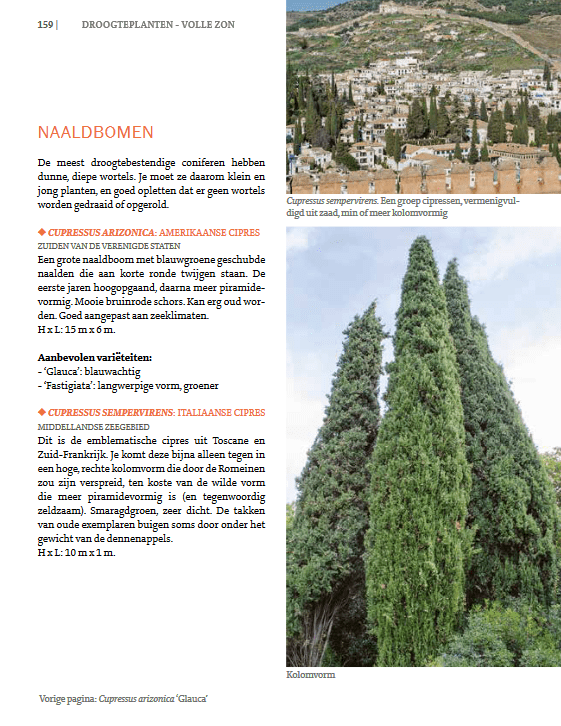
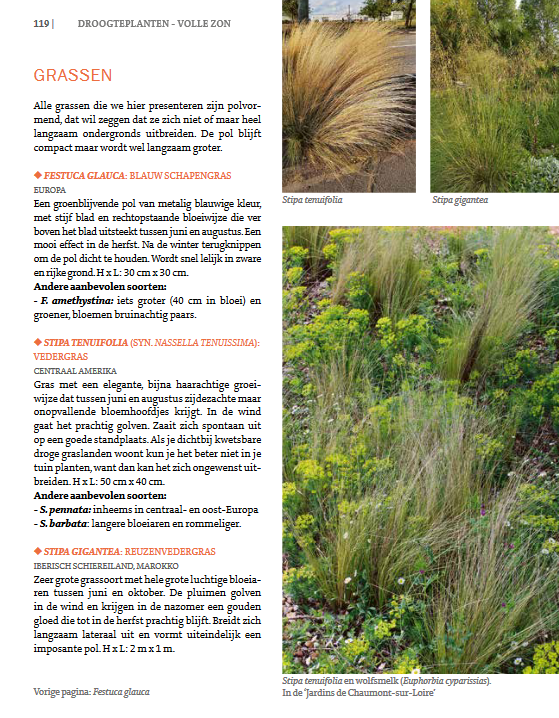
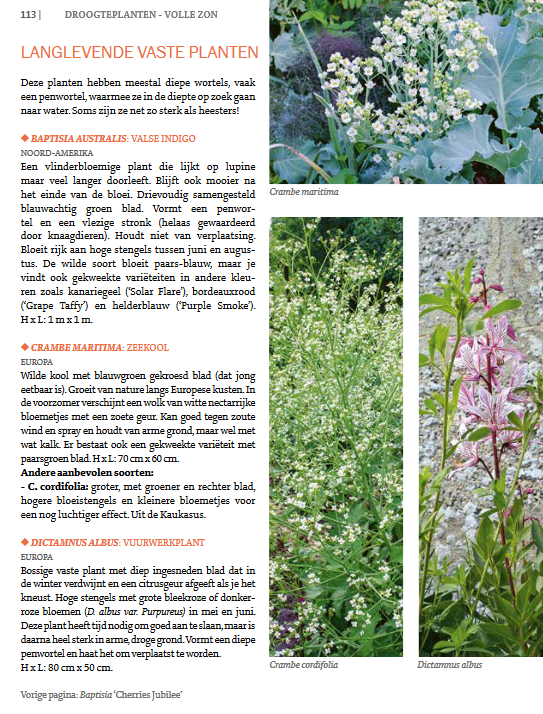
Within the three main groups, further distinction has been made using subheadings into plant groups such as bulbs, ground cover, annuals, grasses, trees and more. The plants are introduced with many lovely photographs and a short description each time.
As mentioned above, we have also adapted the book to our region. A plant’s hardiness means something different here than in France. And, of course, for some plants we could not resist adding information about their edibility.
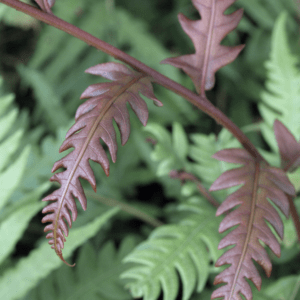
Finally, it is worth mentioning that this book explicitly goes beyond just Mediterranean plants – which other books on dry gardens or drought-resistant plants often focus on. Those are certainly included (from lavender to umbrella pine), but the selection in this book is considerably broader. After all, there are many more plants with adaptations to drought: for example, plants from rocky high mountains (such as edelweiss) or from sandy or rocky coasts (such as thrift). Or from prairies (grasses). Or from the undergrowth of forests, where very little moisture reaches the soil for a large part of the year and there is also considerable competition from nearby trees and ferns. Furthermore, the author does not only draw from European plants, but also looks at North and South America, Africa, and Eurasia as far as Japan (and sometimes New Zealand). That said, Europe, including the Mediterranean region, does form the main body.
Categories