The pumpkin has become quite well established in our cuisine over recent decades. From being an alternative icon, these cheerful, large and colourful fruits have evolved into a fully-fledged autumn and winter vegetable. And that popularity is increasing even further due to the rise of the butternut squash. We are finding this unusual pumpkin more and more often (gradually almost year-round) in the range of vegetables available. It is also gradually earning a well-deserved place among allotment enthusiasts.
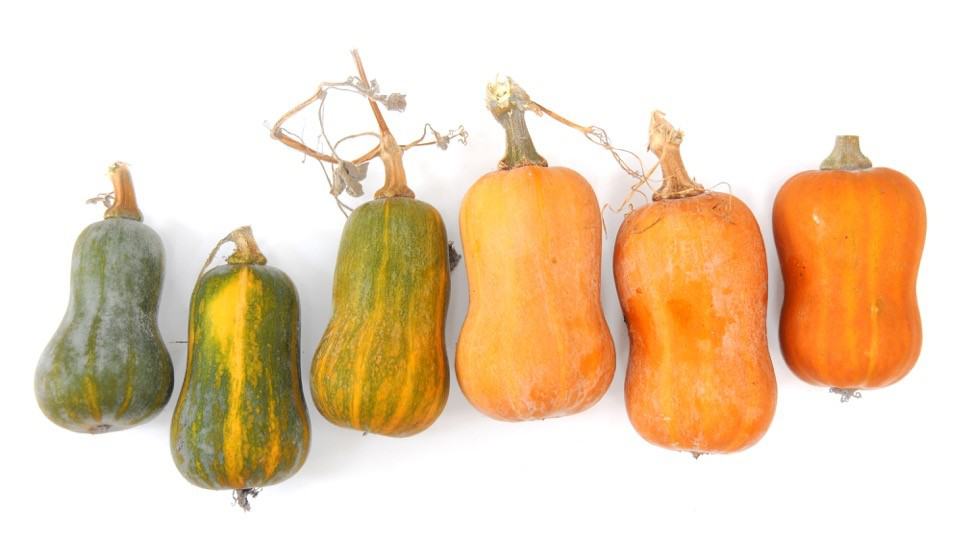 The classic pumpkin belongs to the Cucurbita maxima, while the overpopular courgette is a Cucurbita pepo. The former is primarily intended to keep for the whole winter when fully grown, whereas the latter is best known in its refined young version and is harvested fresh during the summer months and offered as a young fruit. Its optimal shelf life is therefore limited to a few days at the bottom of the fridge. But alongside these two main groups of cucurbits, there is a third group in which interest has grown considerably in recent years. Cucurbita moschata, or muscat squash, form a separate group within the cucurbit family, or Cucurbitaceae. They are originally slightly more southern types with deep orange flesh with a fine texture, a long shelf life and a somewhat sweeter taste. The fruit colour ranges from pale ochre to deep terracotta. A few varieties start out dark green and only acquire that specific colour upon ripening or during storage in the winter months. You can best recognise such a muscat squash by its distinctive stem insertion.
in the garden
Just like with the classic pumpkin, you start by growing your own seedlings in late April to early May. The seeds, slightly smaller and thinner than ordinary pumpkin seeds, should be planted 2 cm deep in a pot filled with potting compost. With a little water, place the plants in a warm, bright spot. Cucurbita moschata squashes require a little more warmth and a little more patience during germination compared to more familiar pumpkins and courgettes, but after about ten days to two weeks, the young plants will emerge. They can be planted out in the garden in mid to late May, but choose a slightly warmer and, above all, sunny spot for successful cultivation. Like all pumpkins, the plants need a generous amount of compost and/or rich organic plant food to support their enthusiastic growth. In the first weeks, giving them an extra water every now and then can be useful, but once they are growing well, you won't need to worry about them anymore. Leave the fruit on the plants for as long as possible so that they can ripen properly. This has a significant impact on their shelf life. Cucurbita moschata squashes have a higher resistance to powdery mildew, and the plants often still look nicely green in late autumn while all other pumpkin plants have completely died off. Cut them from the plant just before the frost and store them in a well-ventilated spot with a constant temperature. You will be able to store most of the fruit until March without much trouble. Check them weekly for soft spots and use any such specimens immediately.
variety
There is a wide choice of muscat pumpkins. The popular butternut owes its name to its striking shape, similar to the true butternut, Caryocar nuciferum. The best known is ‘Waltham Butternut’ with fruits weighing 1.5 to 2 kg. The plants are vigorous with runners metres in length. Highly suitable for a warm spot in the garden and with a good harvest in a warm late summer.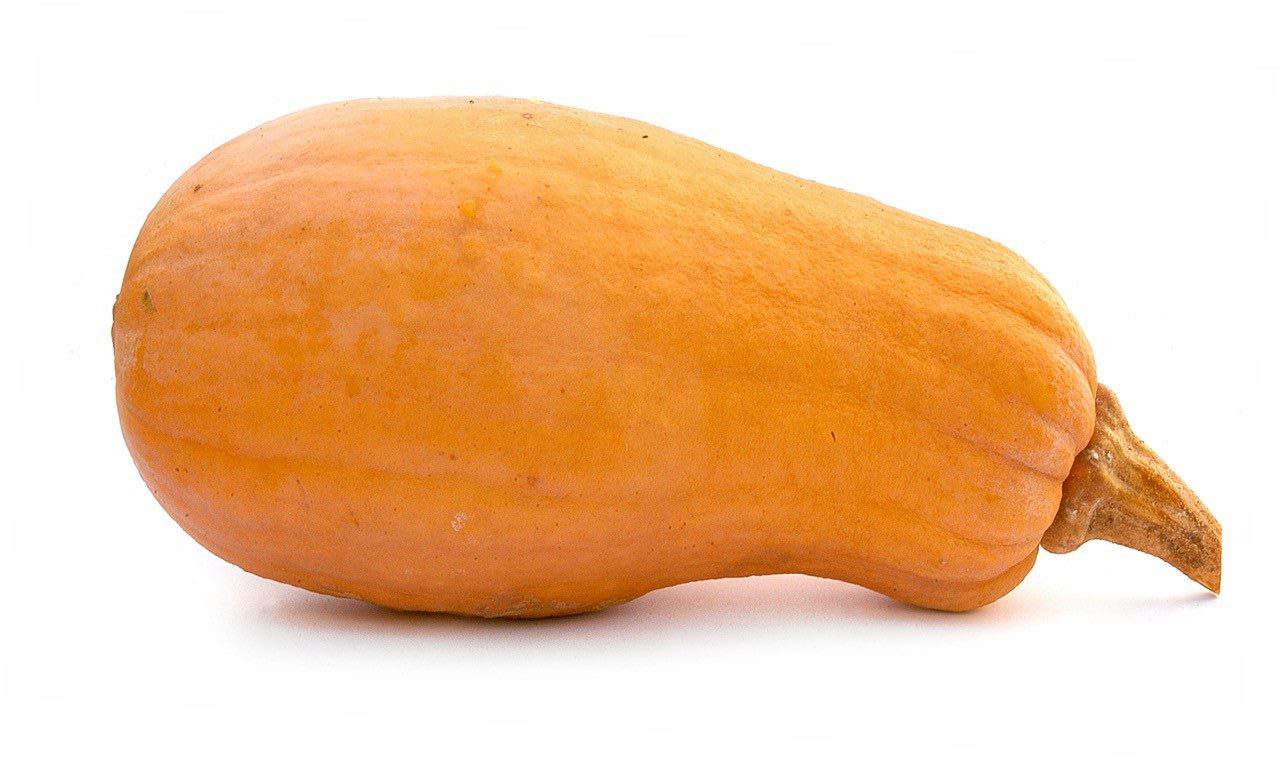
‘Butterbush’ is a selection with a more compact growth habit and slightly smaller fruits weighing from 750 g to 1.5 kg. Fruit setting is much earlier than the classic butternut, which also makes this selection suitable for cultivation in a more open, exposed location or in the open field.
The lesser-known ‘Honeynut’, on the other hand, requires more warmth. The small 500 to 750 g fruits are dark green and change colour to a deep ochre during storage. So it is only suitable for a very sheltered garden or for cultivation under glass or polythene. As its name suggests, it is the ‘sweetest’ muscat squash, ideal as a base for preparing sweet dishes.
Anyone looking for a larger butternut squash can try the Italian ‘Rogosa Violina gioia’. Because of its size, it is once again much later to harvest and is therefore only successful in a wonderfully long, warm summer, in an extra warm, sheltered spot, or when grown under glass or plastic sheeting. You harvest fruits weighing 2 to 3 kg.
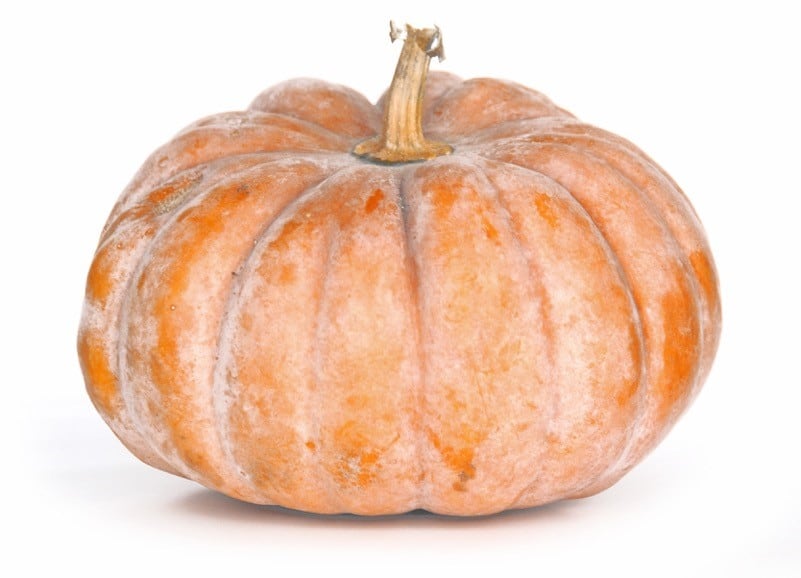 The ‘Musquée de Provence’ found its way over from France. This variety produces large, wide pumpkins with lovely soft ribs. The plants are moderately productive and fruit set is quite late, but it is definitely worth giving these large pumpkins a try. ‘Long Island Cheese’ is a size smaller than the previous one and is therefore slightly more reliable for harvesting in our northern region.
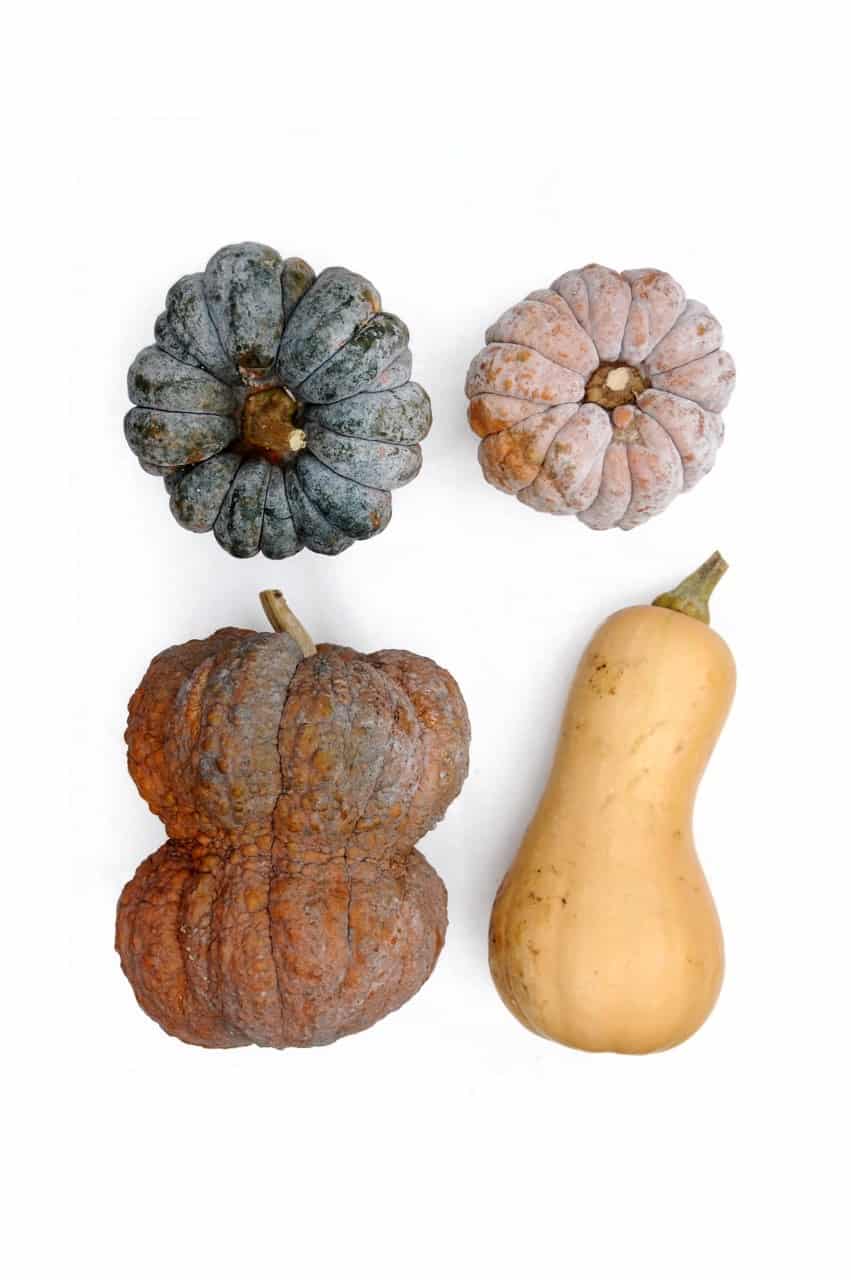 These unusual pumpkins are also popular in Japan. The best known is the ‘Futsu Black’. With the necessary warmth and patience, you can harvest these small, 500g pumpkins in late October in their deep green, almost black colour. Over the following months, they change colour to a stunning deep ochre shade. Do not be put off by their warty appearance and deep folds; use the fruits in the kitchen without peeling them. You will harvest a lovely deep orange flesh with a fine texture and an excellent flavour.
Anyone who goes all out for top quality chooses ‘Shishigatane’, a very unusual and striking pumpkin that originated in the Edo period (1804–1818). The fruits combine the shape of the butternut with the warted appearance of Futsu Black. Cultivation requires a lot of patience and warmth, so successful growing here with us only succeeds in exceptionally warm years or under glass and polythene.
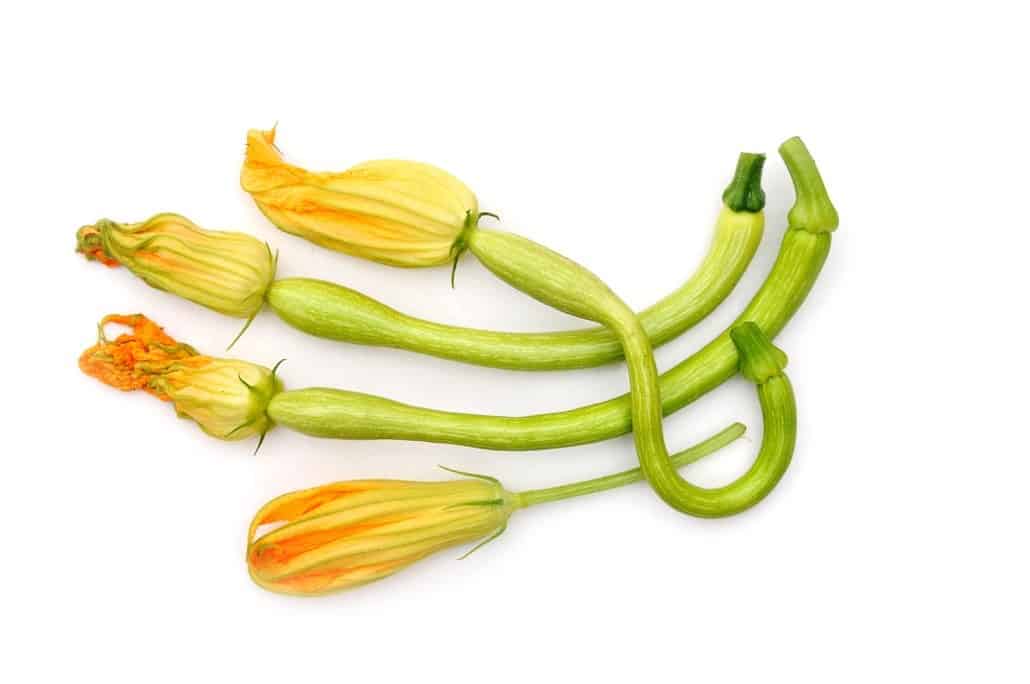 Within this range, a special place is reserved for the Italian ‘Tromba d'Albenga’. This strongly vining muscat pumpkin is particularly popular in its young form as a summer squash. You can let the plants sprawl across the ground or train them upwards along a few poles or bean stakes to save space in the garden. This allows you to grow 4 plants per square metre. For the best result, the young fruits are harvested, just like courgettes, when they are at most 1.5 to 2 cm thick and 20 to 30 cm long. The texture of the fruits is much firmer than that of ordinary courgettes and the flavour is mildly nutty. Summer squashes are just as versatile in the kitchen as ‘ordinary’ courgettes, but they are also fine to eat raw, for example finely sliced and mixed with a vinaigrette. Harvesting them young and regularly encourages the plants to produce even more fruit. If the harvest becomes too abundant, you can stop harvesting in mid-August and let the fruits grow to their full size. Mature specimens can grow to more than one metre long and 10 cm thick. Leave them on the plants for as long as possible and harvest them just before the first frost. The fruits keep for a long time and can be used just like other pumpkins.
in the kitchen
Make things easy for yourself and use the fruit whole after washing, with the skin on. Cut the fruit in half and remove the seeds.
Muscat squash can be traditionally prepared into a wonderfully creamy, nutritious soup, but because of their unusual sweet taste, they are also ideal for roasting, deep-frying or baking.
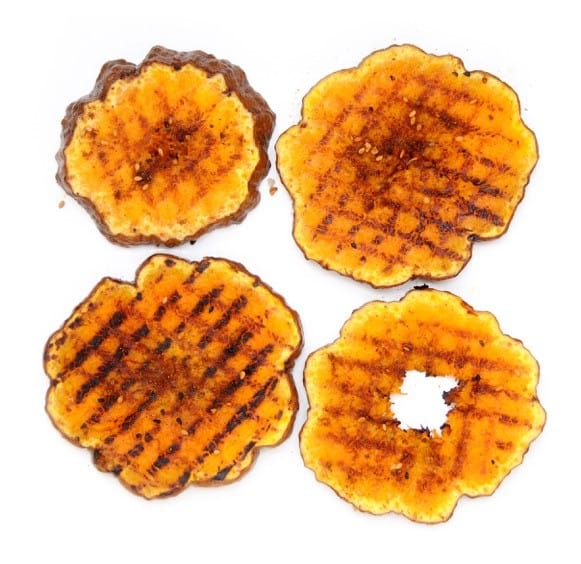
Grilled pumpkin
Ideal for the fine Japanese varieties.
ingredients
a kabocha squash
2 tablespoons of sesame oil, pepper and salt
1 teaspoon of finely chopped fresh ginger
1 teaspoon shichimi togarashi
preparation
Wash and scrub the pumpkin and cut it into 0.5 cm thick slices. Remove the seeds.
Make a mixture of the oil, ginger and herbs and blend everything until smooth using the hand blender.
Use this mixture to coat the pumpkin.
Place on the grill, grill for 5 to 10 minutes, brush again and turn them over. Cook again. Repeat turning and brushing until they are tender. The grilling brings out the striking sweet flavour of these pumpkins even more, resulting in a slightly caramel-like taste.
Sweet pumpkin pie
Ideal for the ‘Honeynut’ squash.
ingredients
for the pastry:
250 g flour
50g of maize flour
tablespoon of baking powder
125g margarine
2 tablespoons of agave syrup
for the filling:
500g sweet pumpkin puree
250 g silken tofu
5 tablespoons of agave syrup
2 tablespoons of flour
teaspoon of baking powder
teaspoon of cinnamon
preparation
Mix all the dry ingredients for the dough and then add the margarine and syrup. Mix in the food processor until you have a smooth dough. Roll the dough out nicely and place it in a greased 30 cm diameter baking tin. Form a nice edge.
Blind bake the pastry at 150° for 10 minutes.
Meanwhile, mix all the ingredients for the filling into a smooth batter. Pour the batter into the pre-baked pastry case and put it back in the oven. Bake for another 30 minutes at 175°C.
Text and photographs by Peter Bauwens.
With thanks to Eden Magazine.

Click here to view the PDF of the full article as it appeared in Eden Magazine.