Sowing annuals is best done directly in the ground. Even so, there are still few amateurs who actually dare to do this... or end up disappointed with the result.
Lieve Adriaensens (Silene nursery) listened to the most common problems when sowing annuals directly in the ground and gives tips that will convince you to get started anyway without a greenhouse, conservatory or warm windowsill – without the fuss of, and worries about, young pre-sown plants.
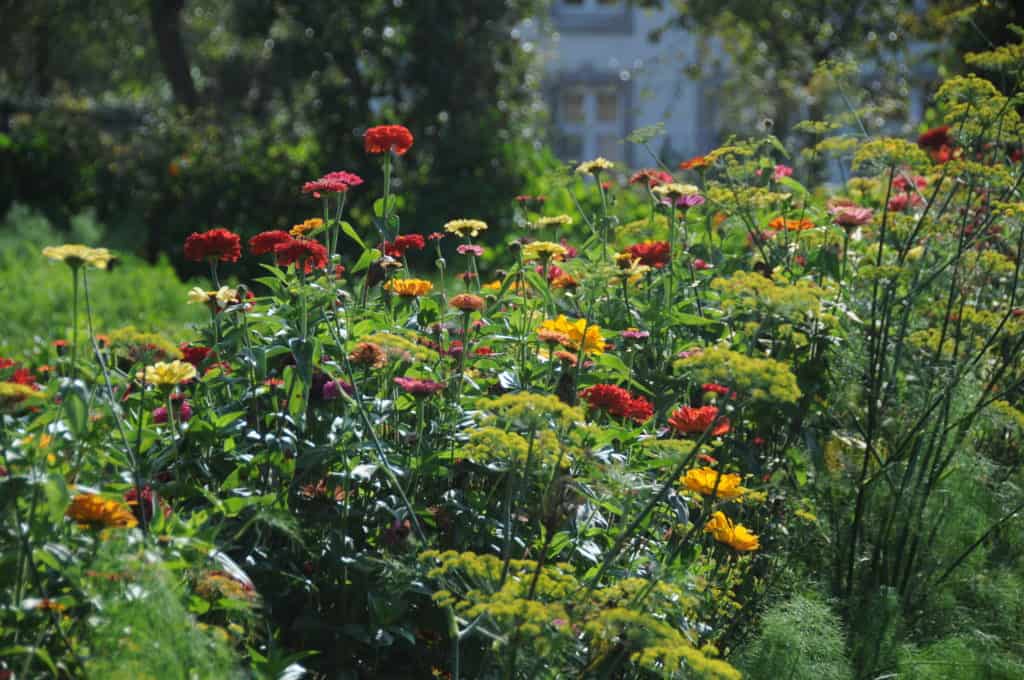
‘It was far too dry for quite some time ...’
It sometimes happens that it doesn't rain for a whole month in spring, and what do you do then? Water the seeds of course, but then you are obliged to do this every day because germinated seed (invisible to the naked eye) that no longer receives water will irrevocably dry out. The solution is obvious: don't water and let nature take its course! As long as it doesn't rain, the seed will not germinate and will quietly wait until after one or more rain showers the ground is moist enough to germinate anyway at its own pace. If it is and remains abnormally dry for a long time, there is nothing left to do but water after all. Do this preferably after sunset, so that the moisture can penetrate the soil for a night. If you water early in the morning, there is a risk that half of it will evaporate when the sun comes up. If you keep this up until the first seedlings appear, the danger has passed and you can continue watering at longer intervals. Covering the seeds with coarse sand also helps to make the soil dry out less.
‘I've sown among the perennials and shrubs...’
In spring, perennials or shrubs are still small and bare, but as the season progresses they grow at record speed into large clumps complete with foliage. In this way, they provide a lot of shade for the germinated or non-germinated annuals, which can never win the competition for light. It is therefore logical that you cannot sow annuals in bare spots under a tree or shrub. If you still want to supplement a perennial border with annuals, sow them outdoors in trays or pots and plant them out when they are big enough to compete. In that way, semi-shaded spots can also be brightened up. Choose annuals that grow in partial shade, such as ageratum, nicotiana, salvia, tagetes,…
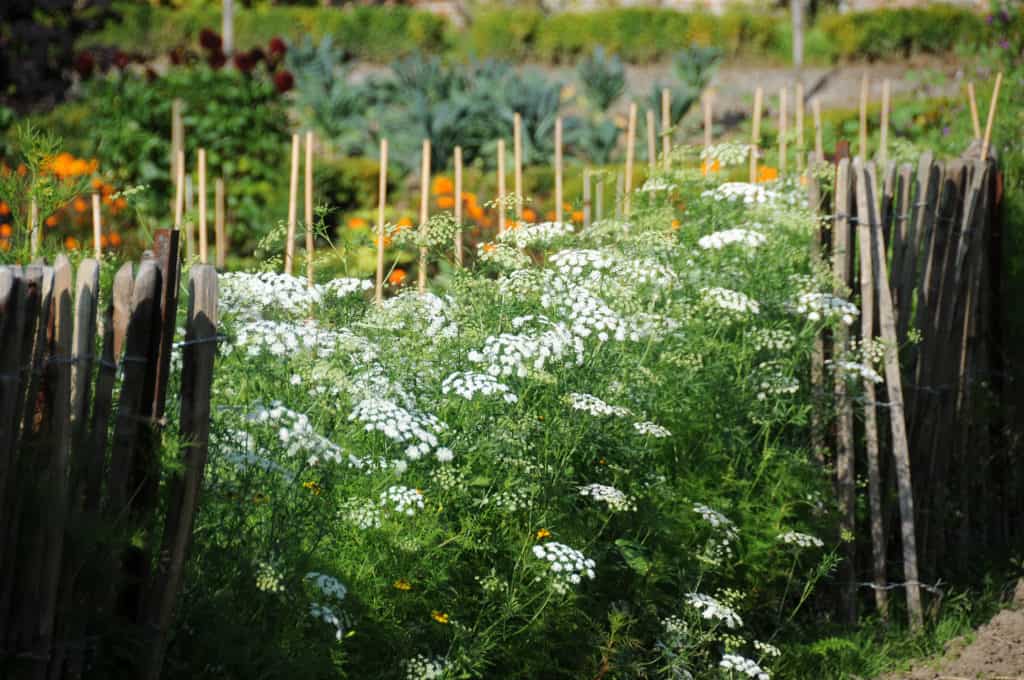
‘I have sown broadcast…’
This method, much like the farmer of old sowing his fields, can indeed be applied to large areas. Unfortunately, not only will the flower seeds sprout, but the weed seeds will too. These have long been lying in the ground waiting for the right moment to germinate, so they will always have a head start. Perhaps you aren't losing sleep over a patch full of ‘unwanted’ weeds interspersed with some flowering annuals, but was this the intention? Therefore, sow in rows like in the vegetable garden, with a spacing of 25 to 30 cm. Mix the seed with sand to avoid sowing too densely and cover it with ½ cm of washed river sand, not garden or potting soil. Those ‘sand rows’ will still be very clear after a few weeks, making it obvious that you can hoe or weed the weeds in between. As the plants grow you can thin them out and in time you will see nothing at all of those rows. Tip: Instead of mixing the seed with sand, you can also mix it with a quantity of fast-germinating radishes. As a result, the rows will remain, even when the covering sand is no longer visible. And thinning out will probably no longer be necessary once the radishes have ended up on your plate.
‘I think I’ve sown too early….’
In principle you can sow from March to the end of May and even into June! But wait until the soil has warmed up sufficiently and do not brave the cold in an early spring because that is no use anyway. Seed only germinates when conditions are right with enough moisture and a pleasant temperature, also at night. Actually, it comes down to this: if you fancy being outside yourself, then the seed fancies it too. Late sowing also has its advantages: even varieties that are otherwise laboriously sown indoors beforehand can be sown outside without any problems. Cleome, Zinnia, Celosia and Ricinus are cold-sensitive varieties that germinate outdoors without any problems in late spring. Moreover, annuals sown outdoors have a major advantage over greenhouse plants: slugs leave them alone much more! These annuals will flower slightly later, but keep going for much longer. If the garden is on dry or sandy soil, try sowing before winter (from September onwards). The seeds will sometimes germinate in autumn and survive the winter, making the plants stronger in spring and flowering earlier, as a bonus for the bees. Unfortunately, this does not work on wet or heavy soil.
‘I may have sown too deeply...’
Some seeds couldn't care less if they are covered with a layer of earth, but many others really dislike it. To make it work for all species, proceed as follows: clear the soil of weeds of course and loosen it, ensuring that the top layer is finely crumbled. Scatter the seed onto this layer and afterwards press it down with a board or a lawn roller. In this way, every grain of seed is well surrounded by earth and there is optimal contact between the seeds and the ground. If you subsequently sprinkle a thin layer of coarse sand over it as well, it won't dry out so quickly either.
‘My poppies aren't coming up anymore…’
An ever-recurring question: how is it that poppies bloom profusely everywhere in June, while hardly any come up in my garden? First of all, three-quarters of poppy seed always remains in the ground without germinating (perhaps as insurance for future years?). Furthermore, it is a well-established fact that Papaver rhoeas, the poppy, needs disturbed soil in order to germinate. Hence the abundant flowering after roadworks, for example. To ‘disturb’ the soil, the top layer needs to be thoroughly worked through every year, after winter, with a garden cultivator or three-tined fork.
Hopefully these tips from the experienced grower will help to convince you to get started without a greenhouse, conservatory or warm kitchen windowsill! The fiddling with, and worries about young pre-seeded plants are a thing of the past. Just sow directly in the ground, with a surprisingly natural effect and you will find that it is addictive…
Text: Lieve Adriaensen
With thanks to Eden Magazine
www.edenmagazine.be