Sea kale, which is known as seakale or maritime cabbage, is not a cabbage like the others. It is a perennial plant (the classic cabbage is biennial) of the Cruciferae family, which grows wild on the coast of Western Europe and the Black Sea. However, nowadays, it is becoming rare to find it in its natural state. This is why it has entered the long list of protected wild plants.
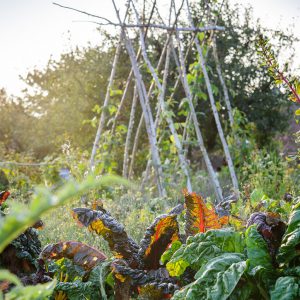
The leaves of the sea kale are whitish-green to bluish in colour. Large and thick, their blades are undulating.
During the spring, long stems rise up, bearing at their tips numerous small flowers gathered in clusters, white in colour and sometimes with a pinkish centre. Brimming with nectar and pollen, bees are very fond of them.
It is the leaf stalks that, when young, are harvested to be eaten like asparagus. They can reach 30 to 50 cm in height. Their taste is similar to that of cardoon, cauliflower or hazelnut. The young shoots are often blanched like chicory. The young leaves, picked in early April while all curled up, are delicious raw. Cooked, they have the flavour of a tender cabbage, with a slightly iodine note. After about 4 weeks, the young shoots become more bitter, so the cloche is removed and they are left to grow in the open air. At that point, they are no longer eaten.
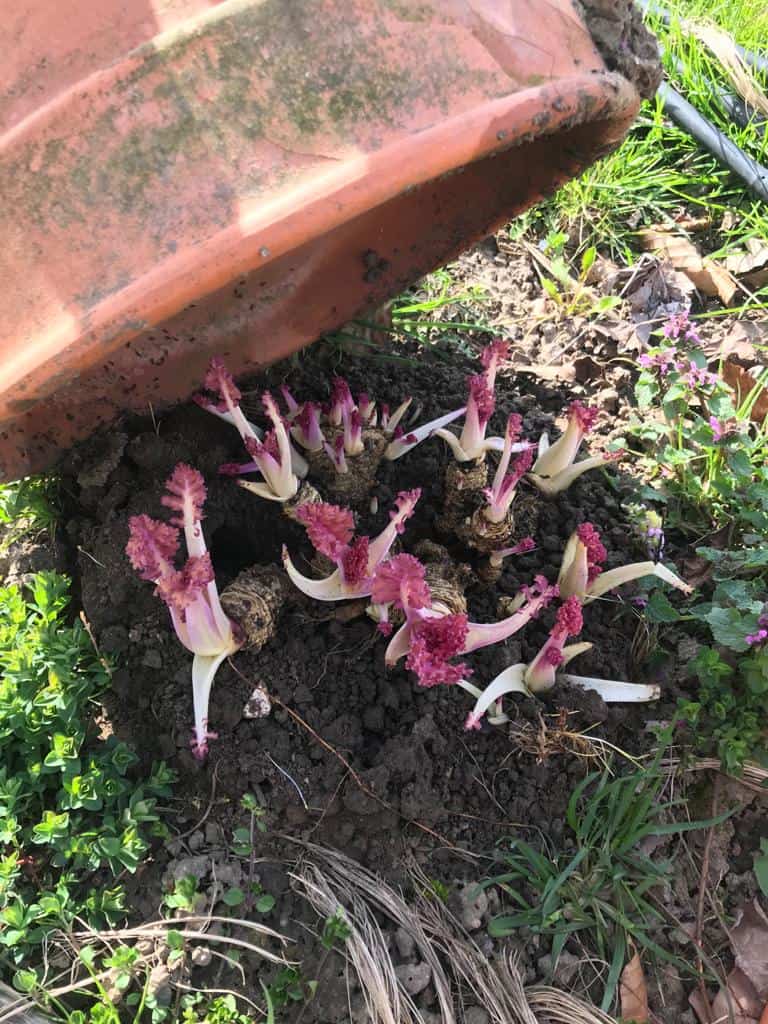 As sea kale is rare and protected, if you wish to enjoy the delicacy of its young shoots, there is only one solution: grow it. Rest assured, that is not very complicated.
Crambe is best sown in full sun or light shade. The soil should be light and well-drained. Acidic soils are to be avoided.
Sowing takes place in spring, from March to June, either in a nursery bed or directly in the ground. Direct sowings must be thinned out every 40 cm, whereas nursery-grown seedlings are transplanted at the 5 to 6 leaf stage.
Then, you have to wait three years before carrying out the first harvest. In the meantime, hoe and water the plants regularly.
One month before harvesting the petioles, blanch them using mulch or a tall opaque cloche.
After the winter, remove damaged and dead leaves, and weak shoots.
Sea kale has been gathered since time immemorial. However, while its cultivation appears to have begun in Greece during antiquity, in Europe, one had to wait until the 17th century. And it was England that started.
Louis XIV demanded to have this vegetable in his vegetable garden!