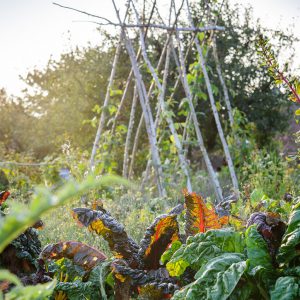
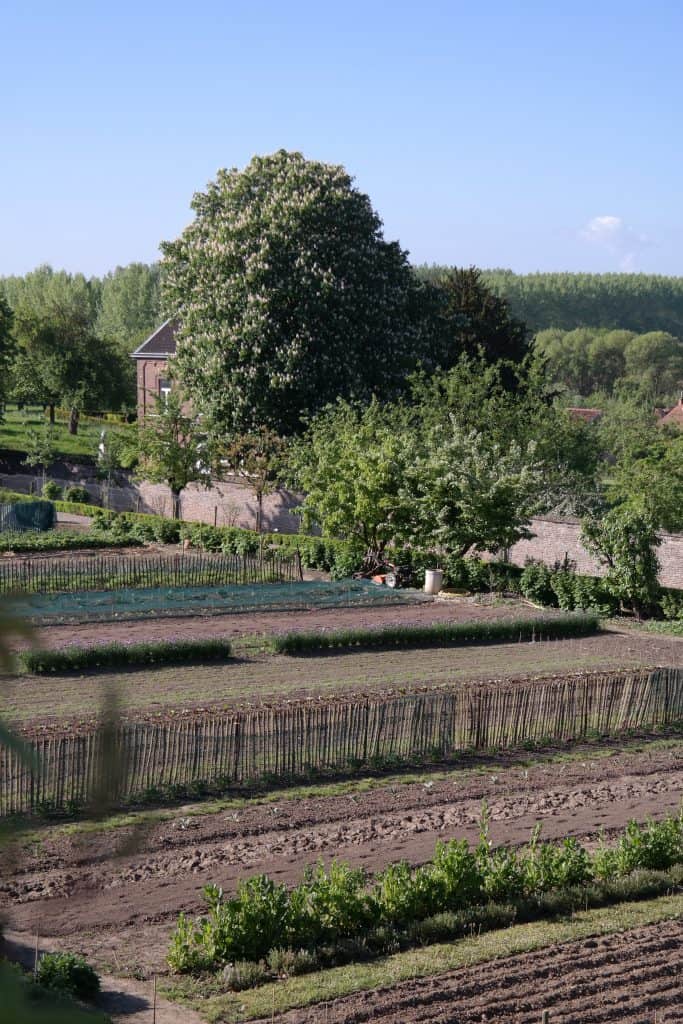
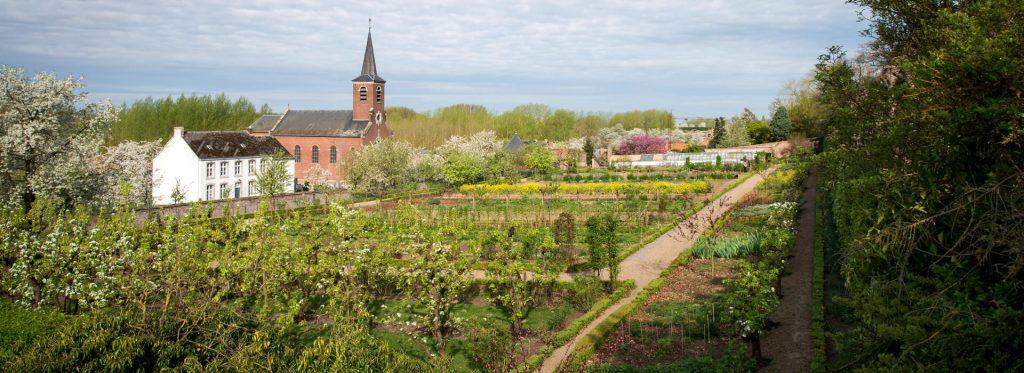
The kitchen garden of Hex Castle fits into a long tradition of seasonal and self-sufficient living. The garden is a reflection of the castle's kitchen. Or vice versa, if you prefer, the garden is on the plate.
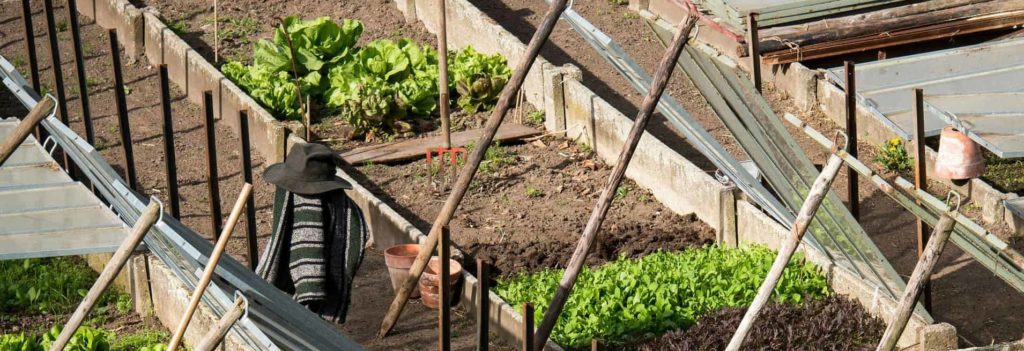
The calendar and cultivation techniques have been passed down and improved from gardener to gardener for generations. This overview may help you to draw up your own sowing calendar for the coming months: from late February to June – for every gardener, whether amateur or professional, undoubtedly the three busiest months of the year.
FEBRUARY/MARCH
The winter months are definitively over: the temperature is rising steadily and all sorts of things are already stirring in the garden. But despite the spring fever, some caution is still required – especially in the first weeks. It can still be quite raw at times in March, and the soil is still wet and cold. Meanwhile, I am already getting the greenhouse and cold frames in order.
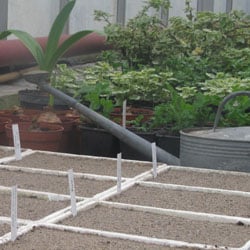 The first crops that require our attention are the vegetables that grow or germinate slowly, such as the celery varieties – celeriac, for example. We sow celery in the greenhouse in one of the seed trays with sieved soil, the seeds lightly covered with sharp sand. I distribute the fine seeds well-spaced – so that the seedlings will not crowd each other out in the time until they are ready to be pricked out. Celery is very slow to germinate and additionally needs a temperature of at least 18 to 20°C: ideal for the conservatory or on your kitchen windowsill. A piece of advice: keep an eye on your seed tray; keep it moist daily and do not lose your patience.
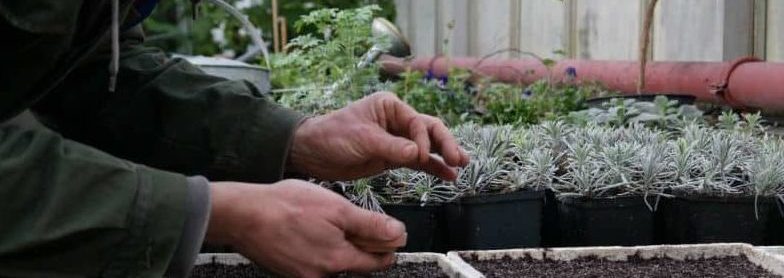
Besides the celery, I am making space on the worktop for the summer leek. Leeks are also a slow germinator with a need for warmth. We sow in a deep container with a raised edge.
 Sweet pepper, chillies, aubergine and melon are plants that naturally have a long season. To be able to harvest the first fruits in mid-summer, they must be sown early. I sow them in seed trays. They all germinate quite quickly. I prick them out into small pots and keep them in the warm greenhouse until May.
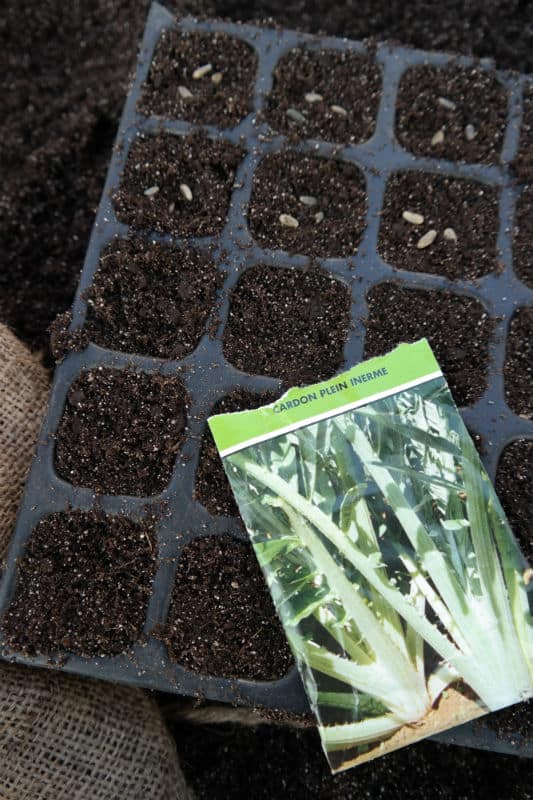
We also make room in the warmth for cardoon and artichoke, and this year I'm also sowing, for example asparagus. I usually sow the perennial plants in trays or small pots.
I keep the heat-loving vegetables warm on an electric heat mat with thermostat – with an extra fleece blanket over it at night. In the old days, there was a coal stove to heat the greenhouse.
Cabbages and lettuce don't need a lot of warmth. In the greenhouse we can get started once the temperature hovers around 12°C. The brassicas for spring and summer like pointed cabbage, early cauliflower and broccoli I sow in seed trays, to then prick out once the seedlings have a few true leaves and show a branched root system. They are best kept under the glass of the cold frame until the weather permits planting them out in the vegetable garden.
The first sugar snap peas I sow them directly in small pots, after having left them to soak overnight. After a few weeks I already plant them out under the glass of the cold frame. Later in the season the glass comes off and they are allowed to grow upwards.
 The seed potatoes of early varieties now also get a place in the greenhouse. We spread the seed potatoes out in crates lined with straw to sprout. For organic cultivation, we choose tasty, resistant old varieties: ‘Belle de Fontenay’, ‘Franceline’, ‘Rosabelle’ or ‘Roseval’.
In the cold frame I sow spring vegetables under glass in rows. I usually start with ‘Goudgele Gotte’ because, with its small head, it is ready for harvest sooner. ‘Goudgele Gotte’, ‘Amerikaanse roodrand’, red oakleaf lettuce, ‘Wit Dunsel’ are all also very suitable as cut-and-come-again lettuce. While awaiting our first heads of lettuce, we can already harvest a mixed salad from this in just a few weeks. 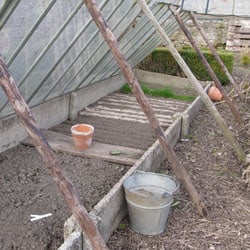 We then sow a row of endive ‘Altijd witte’ and the salad herbs as garden cress, rocket, mustard greens, coriander and flat-leaved parsley. I also sow rows of radish, spring onion, celery and chervil, not forgetting those. If needed, you can also sow the following in the cold frame this month: spinach or lamb's lettuce .
Finally, I sow a large tray of early bunching carrots. ‘Amsterdamse bak’ is an unrivalled old and tasty variety for an early harvest in June. With the ‘gele stompe van Doubs’ and a purple variety, we also vary in colour.
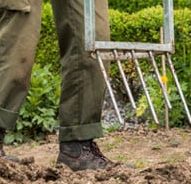 In the vegetable patch we begin by removing the winter cover. We loosen the loamy soil with a broadfork to let the soil dry and warm up in the sun and wind. A few days later we will rotovate, rake and sow.
We are also preparing the plots where we will only sow in April or May (think of carrots, chicory, onions or salsify). In the meantime, the weeds will germinate and we have the chance to hoe once before sowing, which saves us a lot of weeding work afterwards. This technique is called the false seedbed.
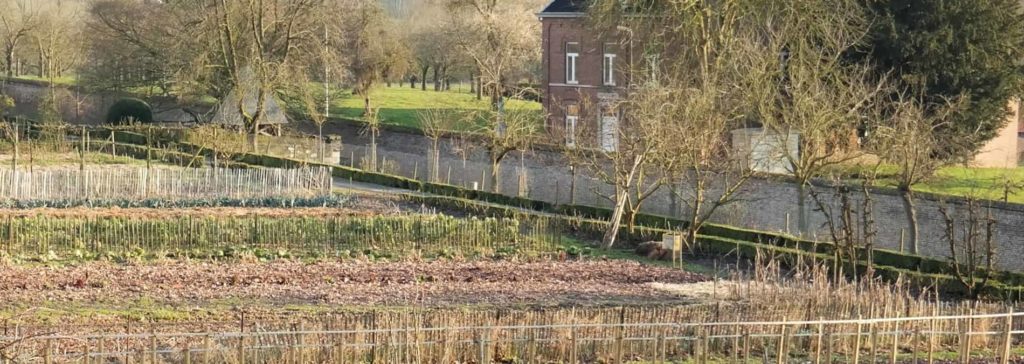
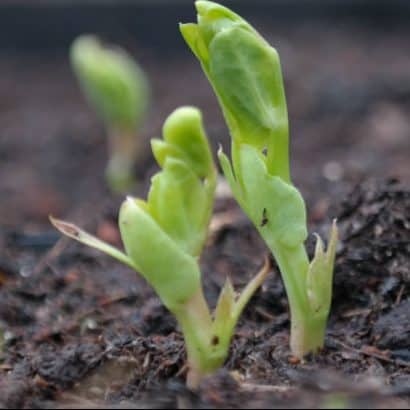
The first crop that, even in bad weather, can go into the ground is the broad bean (broad bean). The broad bean is an often forgotten or undervalued vegetable. Not only are the plump green-harvested beans juicy and sweet, but the leaves, flower buds and pods also lend themselves to all kinds of delicious preparations. Cultivation requires virtually no effort. So do not hesitate to add this heritage vegetable to your range.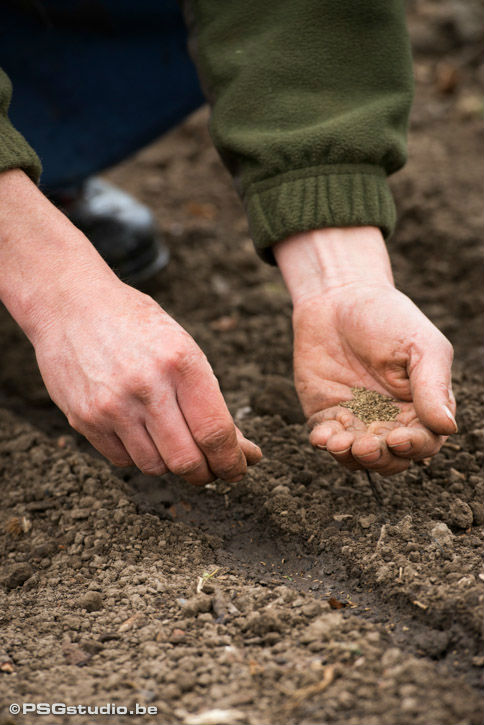
In the first half of March, we can often sow leafy vegetables directly in the ground, such as turnip greens, spinach and chard. For spinach this month we are choosing ‘Viroflay’; the chard is of the ‘blonde Lucullus’ variety.
With peas we wait a little longer before sowing directly in the ground. Peas easily rot if the conditions are not favourable. To ensure a quick emergence, we soak the seeds overnight and let them pre-germinate for a day or two in the greenhouse. To prevent them from getting into trouble during persistent rain, we mound up the row – which largely diverts the fallen rain away from the row. Also, remember to protect the emerging peas from birds with a net as quickly as possible.
It is also time to sow onion and plant onion sets and shallot . A seed-grown onion (such as ‘Rijnsburger’ or ‘Alison Craig’) keeps longer in storage than an onion grown from sets.
Towards the end of the month, the early potatoes can go into the ground. Their place in the greenhouse is immediately taken by late varieties, such as ‘Cornes de gatte’, which in turn begin to sprout.
ODD JOBS FOR MARCH
The perennial crops are checked and replenished.
Chives, rhubarb, skirret and sea kale are divided.
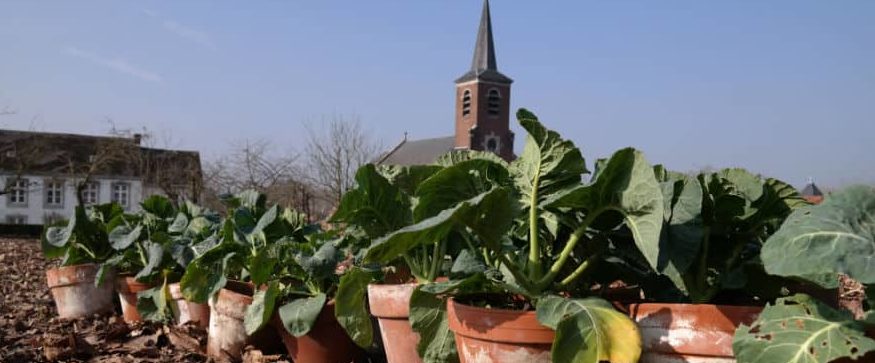
Sea kale is covered with flowerpots for blanching.
Asparagus beds are being raised
The strawberry bed is weeded, fertilised and covered with straw.
April
April is the quintessential spring month, but the risk of night frost remains until mid-May, which poses quite a few risks for the summer fruiting vegetables. Besides bell pepper, chilli pepper and aubergine, summer fruiting vegetables also include courgette, tomato, gherkin, cucumber, melon and pumpkin – and for convenience, sweetcorn and basil too.
These summer crops require a temperature of at least 20°C to 22°C to germinate, and at a later stage still need a temperature above 15°C. A conservatory or indoors by a window is an option, but in insufficient light you will soon see the seedlings stretching out towards the light source. Ideal for raising these species is a greenhouse with temporary heating.
 Sweet pepper, aubergine, chillies and melon have been sown as early as possible (see above). However, a long period indoors or in the greenhouse also brings the risk of all kinds of infestations. That sometimes makes the cultivation of some of these summer crops quite an adventure. Above all, do not let setbacks discourage you.
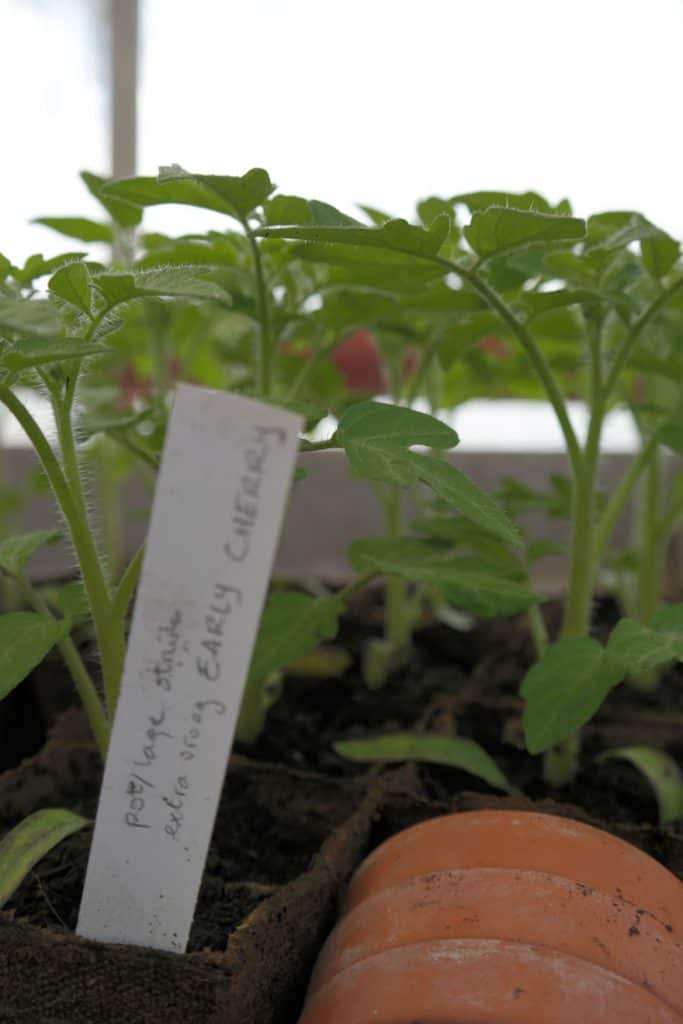
The first tomatoes are sown in late February. These are the earliest varieties, which are planted in the greenhouse – or creeping early varieties for under cold frames. The bulk of the tomatoes, the mid-season outdoor tomatoes, are only sown in early April. They are pricked out after two to three weeks, and ideally repotted a second time after a few weeks as well – before they go outside. I take advantage of the repotting to plant the tomato plants a little deeper each time.
Pumpkin is the fastest grower. We therefore only sow pumpkin halfway through April, to ensure these plants definitely do not have to stay in the greenhouse for longer than four weeks.
SOWING UNDER WARM CONDITIONS
In order, from February to mid-April:
celeriac – celery – summer leek
artichoke – cardoon – melon – pepper – aubergine
courgette – tomato – basil
gherkin – cucumber
pumpkin
With all that hustle and bustle surrounding the propagation of warm-climate fruiting crops, it is hardly surprising that the sowing of the autumn and winter crops is sometimes overlooked in April. So be sure to make a note in your diary: white and red headed cabbages ‘Langedijker bewaar’, kale, savoy cabbage, Brussels sprout, winter cauliflower and winter leek. It is not necessary to sow them in the greenhouse – they do exceptionally well on a seed bed in open ground or in a container.
For winter leeks, we choose ‘Blauwe van Luik’. We also make another early sowing of cauliflower.
In the cold frame we are now also sowing for the first time summer purslane and every four weeks a bit of radish, butterhead lettuce, iceberg lettuce and some salad herbs.
In open ground April begins with sowing the ‘Nantese’ variety of carrot (for summer use and storage). We also sow beetroot, ‘rainbow’-chard, Florence fennel and salsify ; then, between the vegetables, we sow rows of marigold interspersed with nasturtium; and cut flowers such as cosmos, zinnias and sweet peas.
Towards 1 May, we plant the late maincrop potatoes and finally lettuce, cauliflower, broccoli, leeks and types of celery are planted out.
JOBS FOR APRIL
The soil life has awakened – the compost heaps are being started up again.
The insects are also back – we are hanging pheromone traps in the fruit trees.
The carrot plot is covered with insect netting.
Grapes, peach trees and roses are sprayed with sulphur for the first time.
The young cabbage plants are protected against the woodpigeons with a net.
May
May is a month with two faces. On the one hand, we see lovely summer weather with temperatures sometimes reaching peaks of 25°C – on the other hand, the nights can still be frightfully cold.
The greenhouse is crammed full. From May, the fruiting vegetables, such as tomatoes, can gradually go outside to get used to the wind and sun. Always bring them back inside in good time: the shock of a single cold night can weaken them permanently.
Halfway through the month of May, along with ‘the last of the ice saints’, the night frost traditionally comes to an end. After that, the young plants of the summer fruit crops can go out into the garden. During the first half of the month we are busy preparing the plots for the fruit crops so that the planting can then take place without delay.
At the same time, during this period we are sowing once more peas – for a longer harvest season.
We sow parsnip and swede for an autumn harvest; and a little later we sow sweetcorn and New Zealand spinach.
From early May, we can also sow chicory . Sowing chicory, just like sowing carrots, is a precise and patient job – which you can only do in good weather. The more precisely you manage to sow, the less work you will have with thinning the rows. Finally, in the first half of May, we plant the tubers of Dahlia in the kitchen garden borders.
If the weather permits, in the second half of May I sow the first dwarf French beans. I place three to five beans in the row every 30 cm, after which I earth up the row – just like with the peas. After all, beans are equally unable to cope with cold nights or wet soil.
For the rest, the days until June are filled with planting pumpkin, courgette, tomato, pepper and basil, cucumber, gherkin and melon. The earliest tomatoes are, like the melons, planted in the cold frame under glass. The other tomato varieties are trained upwards on string under a canopy.
For pumpkin we always reserve a large plot. Gherkin, aubergine and cucumber also go in the cold frames that have meanwhile become vacant from the spring crop. Gherkin and cucumber are also usually trained up a string, while aubergine and pepper are supported with a simple stake.
JOBS FOR MAY
The first treatments against insects are becoming necessary: a simple ecological insecticide based on soap or oil against aphids on brassicas and leaf miners in the leaf axils of leeks.
Nettle manure is produced to serve as a liquid fertiliser for fruit crops.
The potatoes are earthed up when night frost threatens.
The carrots are being thinned.
A makeshift shelter is being cobbled together for the tomatoes.
When planting the fruit crops, plenty of compost is applied.
The bean poles are being straightened.
The fruit crop plots are covered with straw after planting.
And further
We are looking ahead to the work planned for the coming months. At the beginning of June, climbing French beans and runner beans are also sown – five beans around each pole – along with haricot bean ‘flageolets and a second lot of dwarf beans. In the cold frame I am sowing butterhead lettuce, iceberg lettuce, bulb fennel, late cauliflower and Chinese cabbage once more for a harvest in September.
With the longest day in prospect, the first of our late crops are appearing in the by now well-filled vegetable garden. After all, the autumn and winter brassicas are ready to be planted out one by one, and a place still needs to be found for the winter leeks too. Fortunately, there are the plots of early potatoes that are becoming available.
Finally, we sow curly and broad-leaved endive (‘skarol’), sugarloaf chicory and radicchio-varieties such as ‘Castelfranco’ and ‘Verona red’ in the cold frame to prick out in the summer months.
For the next sowing of spinach we wait until late July, choosing a slow-growing variety such as ‘Viking’ first, for a September harvest. And for sowing lamb's lettuce, winter purslane, turnip and black radish we wait until the summer months are completely over.
Best of luck!
Gust Duchamps, vegetable garden Hex.