
Ward van Teylingen had the largest Viburnum collection in the world, a National Plant Collection Boskoop, 300 of the 450 known ones, some of which, however, are not adapted to our climate. Growers from all over the world came to view this collection. 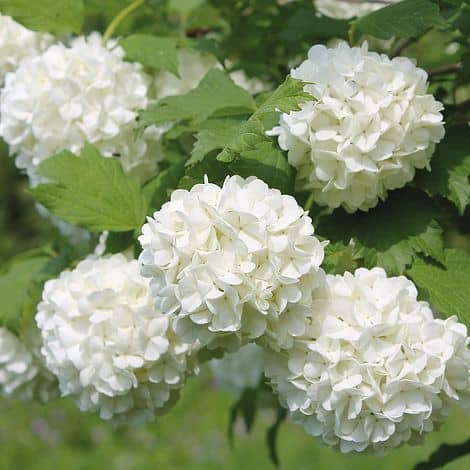 The collecting has become a hobby that has gotten out of hand. Cultivating Viburnum gives an enormous amount of satisfaction and pleasure. It is a very large genus with a great variety of foliage, flower and berry, in terms of size, smallness and scent. Viburnum occurs worldwide in the temperate zones. Most come from Asia and the USA, but they also occur in Europe and Russia. Naturally, he also has several of his own selections to his name.
After 50 years of experience in tree nurseries, hard work and collecting, Ward and Ineke housed their collection in 2007 in the Mei Chu collection garden in Drenthe (NL), which also hosts other national collections (Bamboo, Euonymus and Wisteria). However, they remain collectors with a wide range for the interested plant enthusiast.
The Emmenopterys that they first presented back in June was, later that year, in exceptional bloom at Arboretum Kalmthout! Ward was the driving force behind the stand featuring experts. From now on, he will be a regular feature at Hex, where – alongside a constantly changing line-up of experts, whether or not they have their own stand – he will share all his knowledge with you and, together with the others, try to answer all your questions.
 He starts immediately: Transplanting shrubs and trees.
When it has stood in the same place for no longer than two or three years, a tree or shrub can be transplanted without any problem. It depends a bit on the root system; a plant that produces a few (tap)roots is harder to transplant than one with a dense root ball. To get a better root system, the plant or tree must be regularly root-pruned, this is the best way to prepare for transplanting. When a tree or shrub has stood in one place for longer than three to six years, a small trench must first be dug around the plant. This must be about 20 cm wide and as much as 30 cm deep.
Afterwards, the roots growing straight downwards must be severed so that the plant comes loose. The trench is then filled with potting compost or good garden soil and thoroughly watered; after about 4 to 6 weeks, new roots will have formed in the fresh soil and the plant can simply be lifted out of the hole and moved.
The time for transplanting is autumn; in mid-September the plant is root-pruned and in mid-October it can then be transplanted. Trees and shrubs planted in autumn establish much better because the ground is still warm.
Trees are better transplanted in November, later than shrubs in October.
 Pruning shrubs.
A shrub can be pruned all year round.
If pruning is carried out in the spring, a vigorous regrowth occurs, ,“Pruning encourages growth”, as the saying rightly goes.
That vigorous regrowth can then be pruned back again in July down to two buds (nodes). On flowering shrubs, cut back the non-flowering branches to just below the top of the bush.
2) During a walk through the garden, whenever, pinching the soft tips out of the branches of all the shrubs with your thumbnail. It is not visible, but the plant stops (growing) there and produces new buds on that branch, producing a small shoot in return that will bear flower buds.
This way, the shrub in question will remain small and compact for much longer, while the flowering will be more prolific.
3) If a shrub has become too large and/or too old, it can be rejuvenated. Cut or saw half of the branches back to 30/40 cm above the ground, and the rest the following year. The new branches that emerge can then be halved again in July of the first year.
Now is the time to share the acquired knowledge and experience.
Ward sees the Hex Plant Festivals in June and September as an ideal opportunity to share his knowledge. He attends as an EXPERT and demonstrates, among other things, how to graft Viburnum .
He answers all your garden questions and gives advice to the best of his ability in the areas of soil science, diseases and pests, and their control.
Plant knowledge, pruning, transplanting, propagating and sowing.
He will also assist the youth with advice and practical help regarding their small gardening problems, and his contribution to the children's workshops will enable them to create their own small garden without major difficulties.