At the autumn event in 2026, Peter and Katelijne from De Nieuwe Tuin will once again be a top exhibition give a presentation about Buckwheat.
Buckwheat, A forgotten crop with a promising future
Buckwheat, A forgotten crop with promising potential
Buckwheat, a forgotten crop with a promising future
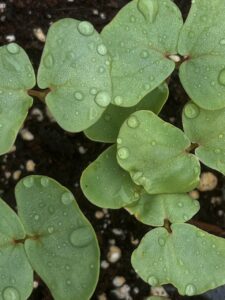
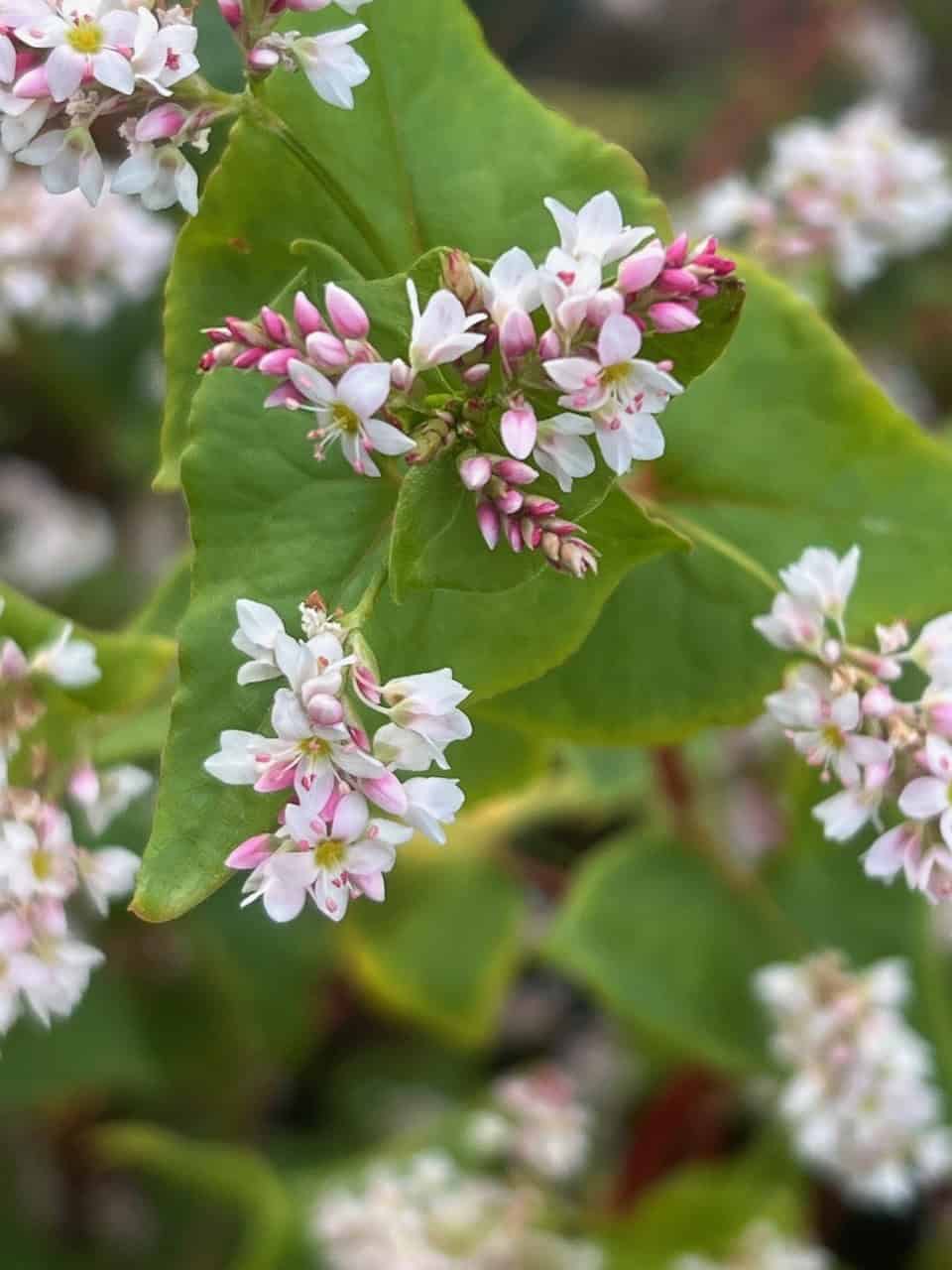
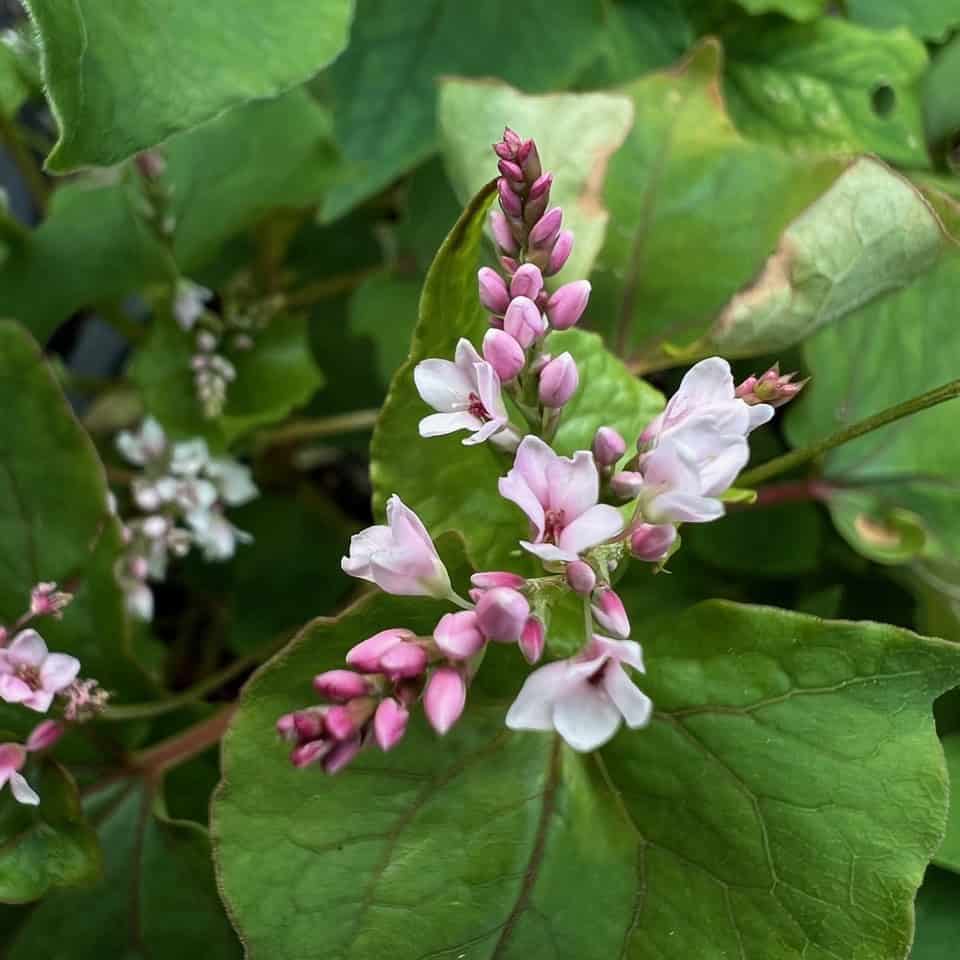
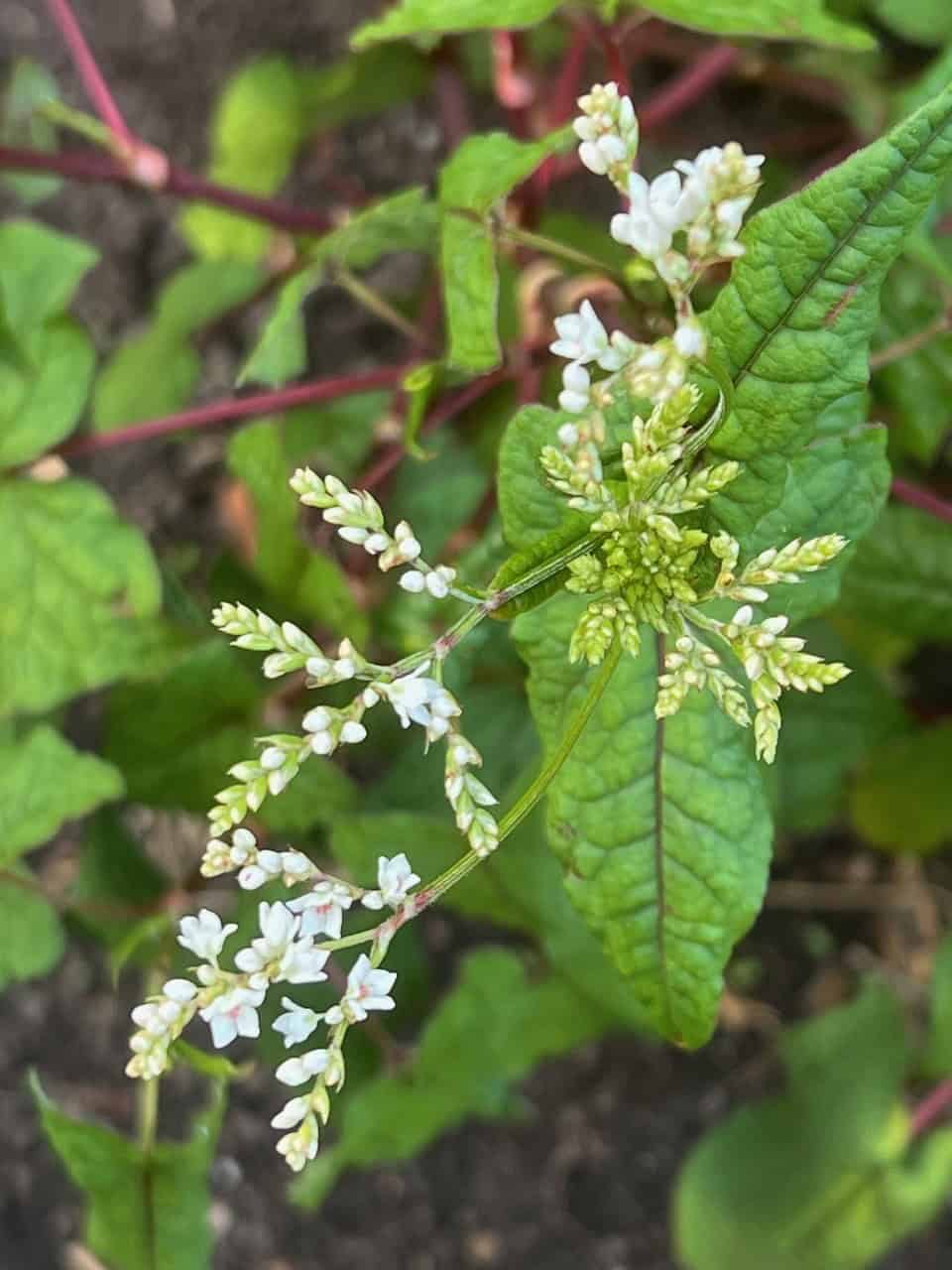
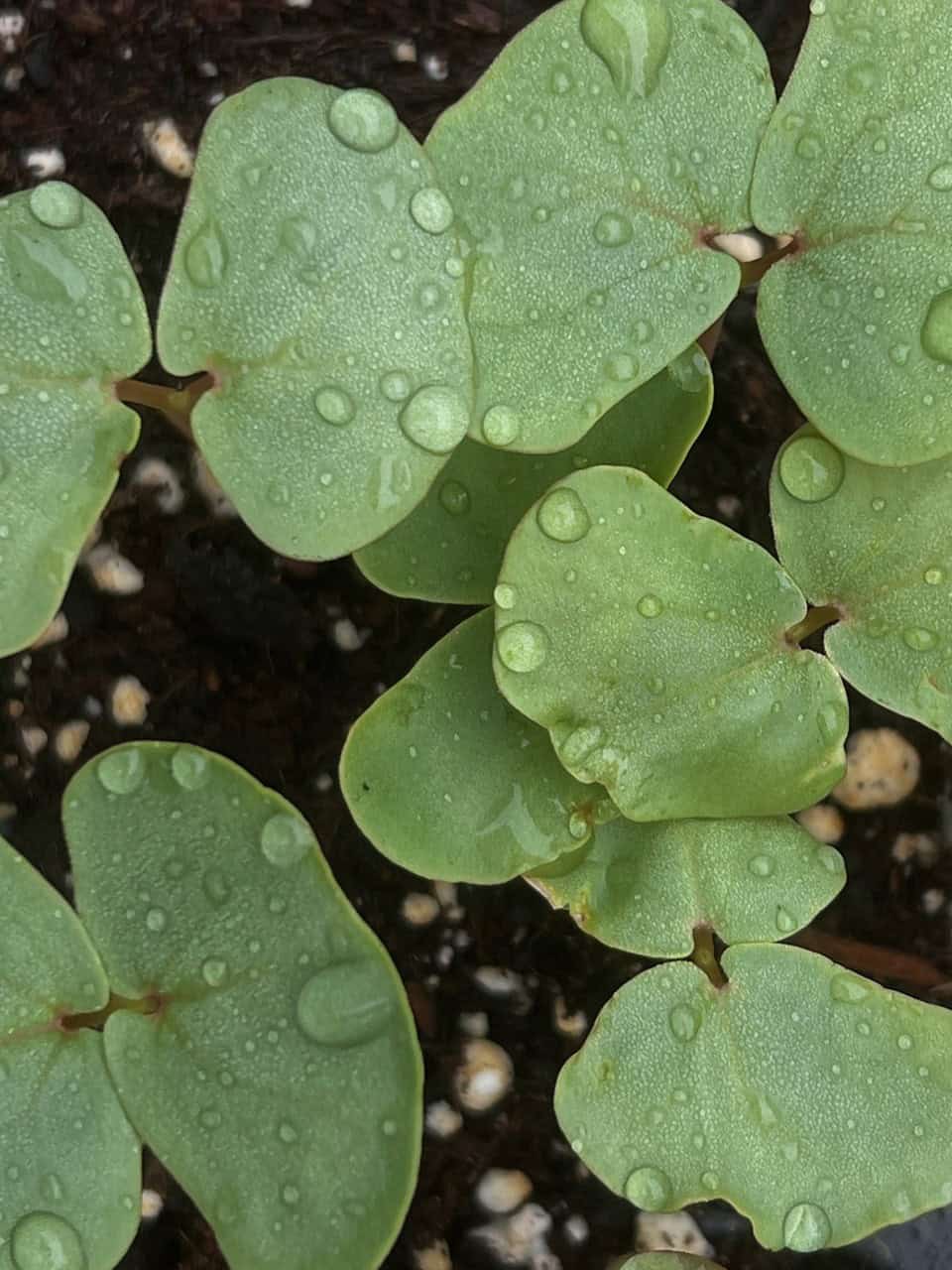
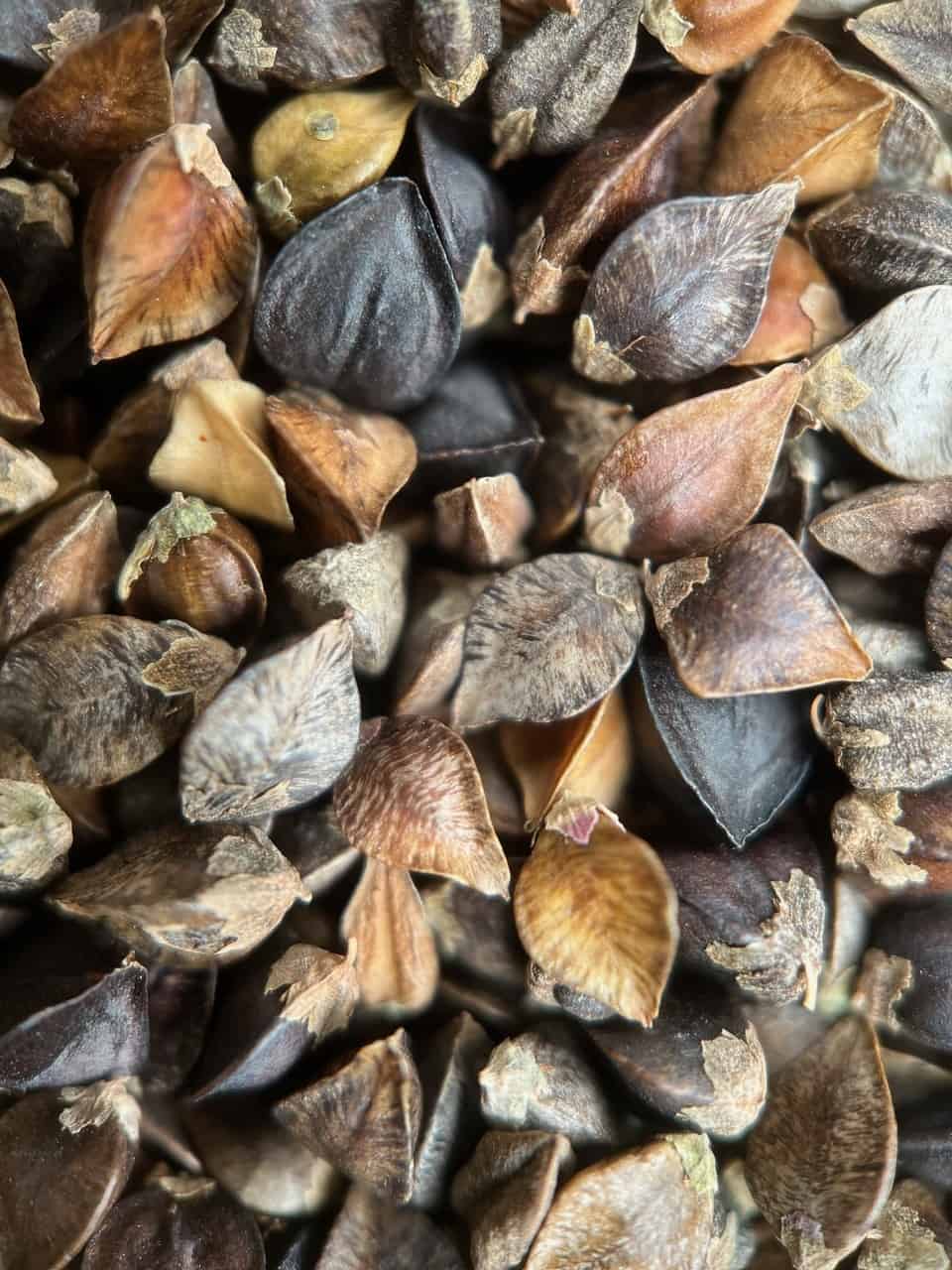
We are eating an increasingly varied diet. Thanks to imports and greenhouse cultivation, we can grow, harvest and supply the most extraordinary crops almost year-round. Yet, because of that oversupply, you might sometimes completely lose sight of certain traditional crops from our regions and entirely lose some striking, unusual flavours from the past. For instance, there are more and more plants and crops that now only evoke some sort of memory somewhere in a distant past, without us still being able to attach a recognisable flavour to them. Buckwheat, for example. What was once a traditional crop in the Low Countries has now almost entirely disappeared. But perhaps we can try growing it in our garden sometime and thus reintroduce it to our dinner table.
Buckwheat
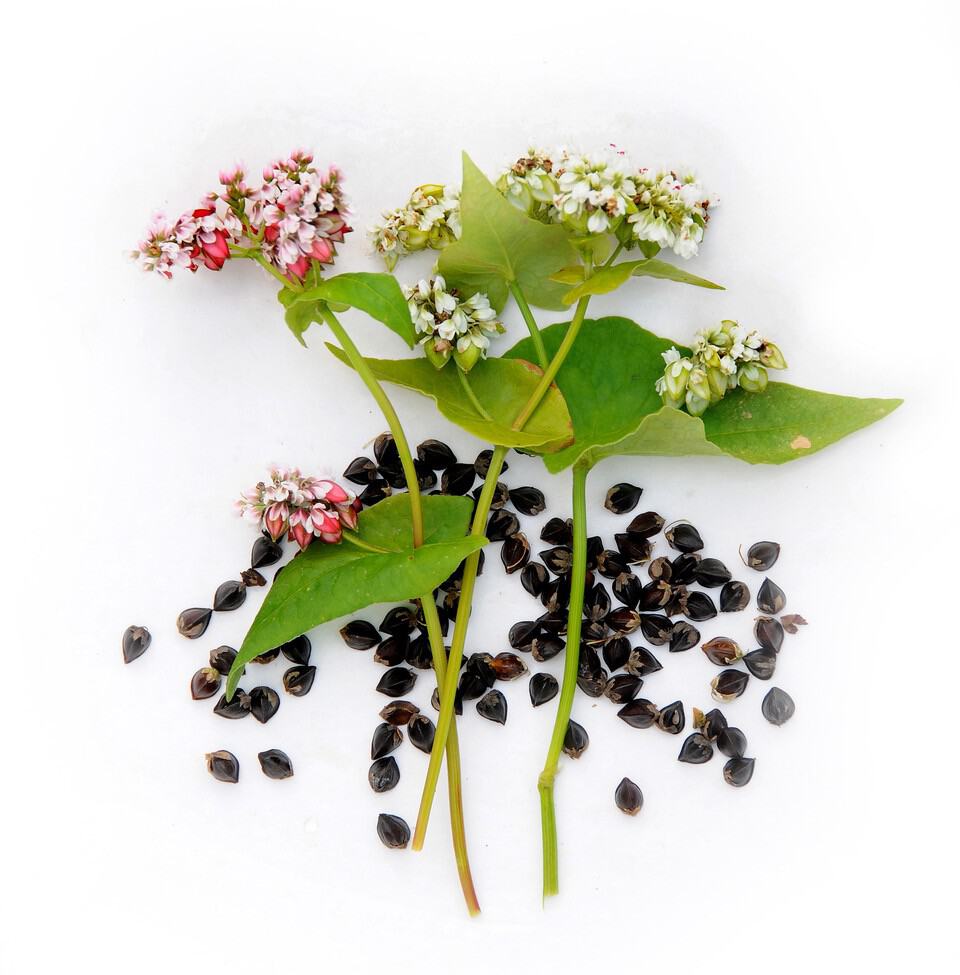
Buckwheat, Fagopyrum esculentum is, much like quinoa and amaranth, not a true grain but a pseudocereal. What we eat are the seeds. The plants belong to the knotweed family, or Polygonaceae and are related to rhubarb, among other things. But due to its use and nutritional value, buckwheat is conveniently classed as a grain.
The plants originate from northern central Asia, from countries such as China, Tibet and Mongolia. Via the oldest trade routes, buckwheat arrived in central Europe in the late Middle Ages. The name buckwheat is made up of the shape of the seeds which are reminiscent of beechnuts and ‘wheat‘ because of its uses as a cooking grain and as flour.
The taste of buckwheat is striking and quite strong, which means not everyone takes to it immediately. That is why, as flour, it is often mixed with other, more familiar grains. Buckwheat is rich in minerals such as potassium, magnesium and phosphorus. It is very nutritious yet remarkably easy to digest and contains no gluten, which has made it very popular in modern diet and allergy foods. Through modern techniques of milling and processing, it has become possible to transform buckwheat into various applications such as flour, pasta, as well as flakes and breakfast cereals, and to soften its striking flavour a little.
Buckwheat is still the standard ‘grain’ for Russia, though, and fits in perfectly with the hard lifestyle of the harsh north. But it is also very popular in Japan as a savoury base for sauces, soups and pastas.
In the garden
Buckwheat is naturally disease-resistant and grows without extra fertilisers even on the poorest and driest of soils. Rich, nutritious soil with plenty of humus or an abundance of nitrogen results in a lush crop but a very poor seed yield. It is not a crop of abundance. It was traditionally grown by somewhat poorer farmers on less fertile soil and without additional fertiliser, and consequently gave a rather modest yield. But it is a super-fast crop. From sowing to flowering sometimes takes barely 30 to 40 days, and after another 30 days of full bloom the seeds ripen and you can start harvesting. With a bit of luck, you can therefore even bring in two crops per season. And the plants also work exceptionally well as green manure and are suitable as animal feed.
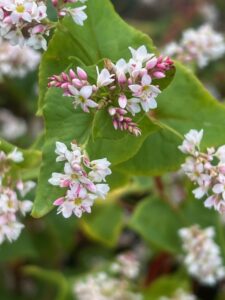
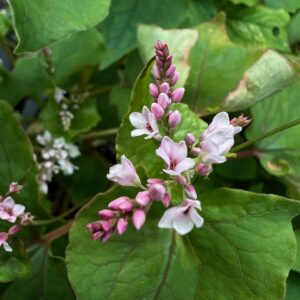
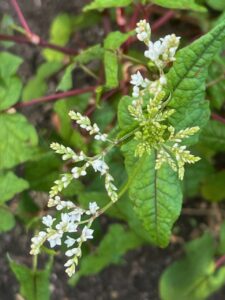
The annual plants are sensitive to frost and you can sow from late April to early July. As a green manure, you can sow until early August. The plants germinate fairly quickly and, depending on the nutrient status of the soil, grow into 50 – 100 cm tall, branched plants. In contrast to its rough character, buckwheat forms strikingly elegant triangular leaves and a refined white, soft pink or deep pink blossom that bees love. Honey from bees that feed on buckwheat has a distinct taste and aroma. The flowering transitions into the striking grey, brown or black triangular seeds. The harvest poses the greatest challenge because not all seeds ripen nicely at the same time, which is successfully achieved in the distribution of traditional grains. It therefore remains a bit of trial and error to find the right moment to bring in most of the seeds at once.
Variation and varieties
Buckwheat cultivation on a global scale is quite modest and almost every region has its own selections and types. The Brabant grey buckwheat and the Staphorst brown-black are Dutch examples. Buckwheat that we mainly find here in health food shops largely comes from France, Poland, China, Kazakhstan, Ukraine or Russia.
For cultivation in your own garden, there are lovely selections, often with striking blooms. Classic buckwheat has white flowers. Canadian selections often feature soft pink shades, and plants from Vietnam and China sometimes boast a striking bright pink hue. Some of these strikingly flowering varieties will often flower from spring until well into autumn in nutrient-rich soil. In this way, they form a striking, graceful and colourful display that is well suited for use as an unusual cut flower, or they can be used as somewhat unconventional annuals in the garden. If you are really going for the seed yield, the black Japanese buckwheat scores best. The fast-growing plants produce white flowers that fairly quickly and within a remarkably short period form a large harvest of fine, large seeds. The ripe seeds are attached by thin threads to the spent flowers. With this Japanese selection, those seeds cling quite well to the spent flower cluster, making them easy to harvest by hand. This requires the necessary patience, but ensures that virtually nothing of the harvest is lost, which is a major problem with more traditional buckwheat. By harvesting twice with a two-week interval, you achieve maximum yield.
In the kitchen
You can use the whole seeds for sprouting. The young seedlings have striking red stems and mild-tasting light green leaves. This makes it ideal for growing buckwheat microgreens on the windowsill, even in the middle of winter.
The whole, peeled seeds can be cooked just like grain. Most people prefer to roast the seeds beforehand for a more noticeable, pronounced nutty flavour. And the seeds can of course be coarsely ground into buckwheat groats, as a base for porridge. Buckwheat is popular and most well-known here with us as buckwheat flour. That is usually mixed with wheat flour as a base for nutritious buckwheat pancakes
Recipe
savoury buckwheat pancakes
Apart from the more traditional sweet version of pancakes with butter and syrup, there is also a savoury version with herbs. Because buckwheat is naturally gluten-free, you can easily incorporate it into completely gluten-free dishes.
Vegan and gluten-free savoury version
ingredients : 1 cup buckwheat flour, 1 cup rice flour, 1 cup oat flour, 1 cup maize flour, water, coriander and cumin, dried or fresh.
a pinch of salt, sunflower oil
preparation
First mix the flour and the dried herbs, then the fresh herbs and the water (1 cup of water / 1 cup of flour). Let the dough rest for at least one hour.
Heat the oil in a frying pan and fry the pancakes in it. Serve with extra vegetables on top.
Traditional sweet version
ingredients: 1 cup of buckwheat flour, 2 cups of wheat flour, 1 cup of milk, 2 eggs, a pinch of salt, 2 tablespoons of butter, syrup
preparation
First mix the flour with the salt. Next, mix the milk, eggs and 1 tablespoon of butter. Combine both mixtures, mix intensively and leave to rest for 15 minutes.
Fry the pancakes in butter and serve with syrup, baked apples, stewed pears…
Conclusion
If you want to use buckwheat in abundance and regularly, you simply buy it at the health food shop. But anyone wanting to bring in a home-grown harvest will soon notice that, especially on somewhat poorer soil, it is a very easy crop to grow. Harvesting by hand naturally demands a lot of time, but with the right variety you can count on 400 grams per square metre. In any case, you will be pleasantly surprised by the graceful growth and striking flowering. Bees and bumblebees are crazy about buckwheat and will be grateful to you for trialling these plants in your garden.
What you do not harvest, or what is lost during harvesting, either seeds itself within the same season, sometimes resulting in plants that flower again, or grows into a new harvest next year. This ensures you are provided with spontaneous seedlings for years to come. And what you harvest can form the basis for very simple dishes with a striking flavour. The greatest challenge, therefore, is to familiarise the next generation with buckwheat. But if you can show how easily and beautifully the plants grow and flower, and how much patience it takes to gather the harvest, you undoubtedly have a food crop that deserves plenty of respect and belongs on the table more often.